3 Your Kingdom Come

Studying this lesson will help you:
- Explain how the gospel of the kingdom announces what God has done and is now doing to overcome evil.
- Recognize and use biblical concepts related to the theme of the kingdom of God.
- Explain the surprise of “the mystery of the kingdom” in terms of the Messiah coming not once but twice.
- Explain how Christ intended the missionary enterprise to extend His victory of the cross and resurrection.
- Explain the significance for mission of a “two-tier” timeline of history, in which evil continues even though Christ’s kingdom is overcoming evil.
- Explain how Matthew 24:14 gives hope and focus for completing world evangelization.
- Explain how Jesus pursued His lifework guided by a vision of the kingdom of God as a fight against evil in order to bring mercy to the nations.
- Explain how prayer can be seen as rebellion against the status quo.
- Pray with hope and strategic purpose for God to restrain evil powers in order for people to hear the gospel and hope for lasting change.
To accomplish God’s mission, or to enter it at all, we must be convinced that God is not merely managing evil—He is destroying it. Without such hope, we will not likely enlist ourselves in the spiritual war that we see raging throughout the earth. We are likely to explain away the present hurricane of darkness, acquiescing to it as if it were a passing outbreak of bad weather. But we know better. The Bible is clear about the extravagant price God has already paid to reconcile people who, at one time, were His enemies. The Bible clearly shows God’s determination to dismantle every evil power, with present-hour manifestations of the forthcoming triumph. Jesus had a prevailing theme in His teaching: the kingdom of God.
He used that theme to call people to follow Him. He used that language to enlist His friends to follow Him further—into the final stages of God’s global war to defeat evil to liberate people.
Christ’s focus on the kingdom of God helps us understand the enormous difficulty, the great hope, and face matters of huge significance in God’s war with evil powers. It is no small thing to establish communities of Christ’s life as outposts of light in the midst of spiritual darkness. Because of their great certainty of the inbreak of Christ’s kingdom, it is common to find servants of Jesus loving their own lives so little that fear of death does not hinder them. These people pray and labor for nothing less than His kingdom coming on earth as it is in heaven. Such a pursuit of Christ’s kingdom is the heart of all true hoping. It is the soul of all praying. The kingdom of God is the core of His mission.
Hope
God has called us to live our lives as a bold act of hope. To hope is not merely to wish for small improvements in personal circumstances. Hope expects all things, large or little, to be overwhelmed and filled with the immense glory of Christ. Thus, true hope pursues global glory and total triumph over evil. Those who live in this hope daily can face the worst evils and sustain their courage because they follow Jesus as king.
We’ve already identified God’s ultimate purpose to be worshiped with obedient love from all peoples. We’ve traced the trajectory of God’s mission through some of the turning points of the Bible’s story. Now we will focus more closely on the way God liberates people from a kingdom of satanic darkness to serve Him as worshiping priests from all nations.
I. Basic Kingdom Ideas
A. The Meaning of the Word “Kingdom.” We commonly use “kingdom” to designate a king’s geographical domain or the people who belong to such a realm or country. The Bible uses the term “kingdom” in a different and dynamic way: The word “kingdom” refers to the authority or the right to rule, rather than referring to lands within the borders of a country.
B. The “Kingdom of God.” The kingdom of God is the exercise of God’s kingship, His authority, His right to rule. It is all based on His tremendous might, supreme power, and great glory.
II. The King and the Coming of the Kingdom
A. The Mystery of the Kingdom. Jesus used the idea of “the mystery of the kingdom” to describe a time of mercy for the nations before final judgment. The surprise that defines the mystery is that the expected kingly messianic figure was to come not once but twice. He will come in a blaze of glory in His final coming as the Son of Man (Dan 7). But this is preceded by His first coming in humility and in a hidden form as the Suffering Servant of God (Isa 42; 49; 53).
1. The Old Testament Perspective. The Old Testament saw the kingdom coming as a single cataclysmic event of judgment on God’s enemies, beginning a time of God’s peace and power.
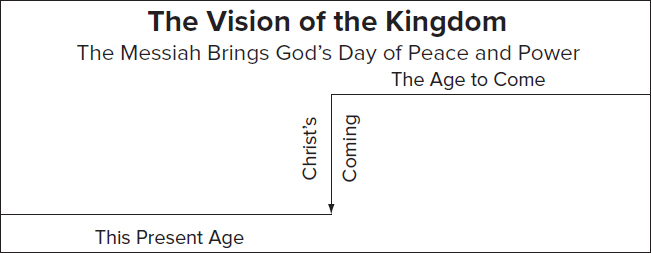
2. God’s Kingdom Comes in Two Stages:
- Jesus’s First Coming. The kingdom has already arrived in Jesus. But it came and it continues to operate in a low-profile way. Jesus’s way of breaking satanic power was noticed, but it was unexpected by most people. In His lifetime and in the present time, Jesus the Messiah is delivering people of all nations from the grip of evil’s power. He is now offering the reality of living under God’s rule, and with it, many blessings. This was prophesied in the Old Testament, but at the time of Jesus, most of the people misunderstood.
- At the End of This Age. It will come openly, in all the world’s view, crushing all earthly powers, destroying every attempt to usurp God’s rightful rule, and purging all sin and evil from the earth. This fulfills the Old Testament perspective.
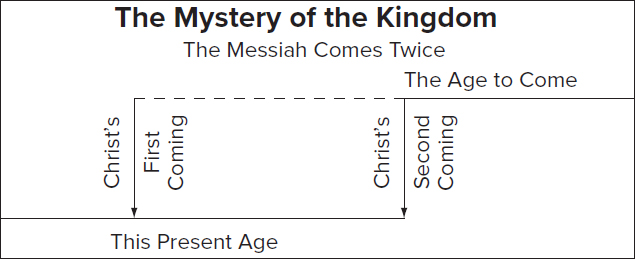
B. The Victory of the Kingdom. God’s kingdom is now coming as a progressing victory over Satanic dominion. God is now rescuing people of every nation from the power of darkness. Ultimately our Lord will undo the curse over all creation.
This “present evil age” has already been invaded by “the age to come” of God’s kingdom. Satan has already been defeated, but he is destined to be destroyed in “the age to come.” We are now living in the overlap of the ages. We work between the “already” of Jesus’s first coming and the “not yet” of His second coming. The time between the two comings is fundamentally a time of conflict resulting from the overlap of the ages. The missionary task of the church (evangelizing the nations) is the primary reason for this interim period. The victory of God’s kingdom is accomplished in three great acts:
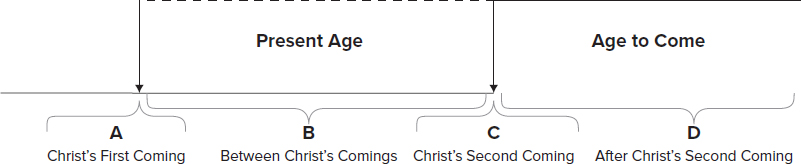
1. Christ’s First Coming: Breaking Satan’s Power. The mission of Jesus on earth by His life, death, and resurrection.
2. Between His Comings: Undoing Satan’s Works. Ascended to God’s throne, Jesus now continues His mission amid the nations, working with and through His people, the church.
3. Christ’s Second Coming: Destroying Satan’s Kingdom. Christ, the Messiah, will come in full glory and will eliminate evil.
III. The Mandate of the Kingdom
George Ladd finds enormous mandate force in the promise of Matthew 24:14. We emphasize this verse not because we are seeking or predicting a specific time of Christ’s return but to emphasize that God apparently intends to wait until every people has had an opportunity to respond to an adequate testimony of the gospel of the kingdom.
A. The Message of the Kingdom. The gospel of the kingdom declares and displays God’s triumph over the three enemies that have been the ruin of people throughout history: death, Satan, and sin. They have each been defeated by His first coming, and they will each be destroyed at His final coming.
The gospel of the kingdom announces what God has already done and is now continuing to do to conquer the enemies of sin, death, and the devil. God intends to bring substantial healing and transformation in the present day and eternal life in the eternal kingdom. The gospel of the kingdom is not only an announcement; it is a promise of what God will do to reconcile all things under the kingly headship of Christ.
B. The Mission of the Kingdom. Matthew 24:14 is the only verse in Scripture in which Jesus gives His disciples a specific description of what must be accomplished before His second coming and the end of the age. World evangelization is an explicit condition for His return. The gospel of the kingdom must be proclaimed in all the world. Only then will the end come. What constitutes an adequate “witness” or who constitutes “all the peoples” by Christ’s understanding cannot be discerned with precision from the words of Matthew. Even though this time cannot be seen, we should now take seriously any significant barrier between peoples that may block the flow of the gospel so that none of “the peoples” mentioned in Matthew 24:14 are bypassed.
This promise tells us that our mission is to overcome barriers that may hinder people from hearing or understanding the gospel message. The clearest “witness” of the gospel would be ongoing communities of people who are living in biblical obedience to Jesus.
1. Meaning to History. This truth, that God is holding history open for the church to complete its task, gives meaning to history and gives enormous significance to the obedience of the church to do its part in fulfilling this promise.
2. Motive of the Kingdom. If it is true that the coming of the Messiah is in some way contingent on the church proclaiming the gospel of the kingdom to all peoples, then we have great motivation: Final victory awaits the completion of the task. No greater hope can be conceived. Ladd asks and answers the question, “Do you love the Lord’s appearing? Then you will bend every effort to take the gospel into all the world” (p. 68).
This was to fulfill what was spoken through Isaiah the prophet:
“Behold, My Servant whom I have chosen;
My Beloved in whom My soul is well-pleased; I will put My Spirit upon Him,
and He shall proclaim justice [literally, judgment] to the Gentiles.
He will not quarrel, nor cry out;
nor will anyone hear His voice in the streets.
A battered reed He will not break off,
And a smoldering wick He will not put out,
Until He leads justice [literally, judgment] to victory.
And in His name the Gentiles [literally, nations] will hope.”
(Matt 12:17–21)
Read Matthew 12:17–21. For Matthew to phrase verse 17 in the way that he did shows that the disciples had come to discover much about Jesus’s identity in Isaiah. How was this prophecy fulfilled in Jesus’s lifetime? Is this one of the prophecies about the servant (located in Isa 42:1–4)? How is this prophecy still being fulfilled today? How will the nations be moved to hope?
IV. The Messiah and His Mission
Imagine Jesus reading His Bible. What would He have come to understand about God’s purpose and His own part in it? There’s no question that when Jesus began His ministry, the kingdom of God was more than a mere topic of His teaching. The reality of the kingdom of God set the stage for much of what Jesus did, said, or prayed. He knew that He was the key figure in the epic struggle between good and evil. While Jesus was training His followers, He gave them a clear picture of the drama of God contending with evil in order to redeem the nations.
A. The Day of the Lord. H. Cornell Goerner shows how Malachi shaped the vision and ministry of both John the Baptist and Jesus.
1. God’s Day of Judgment. Malachi had warned Israel that God’s judgment would fall on them first, rather than the nations who were perceived to be God’s enemies. Why judgment on Israel? Because of God’s desire to be worshiped by all nations (Mal 1:10–11). Israel had failed to fulfill the most rudimentary regimens of worship and fearing God’s name (Mal 2:1–3; 4:1–6).
2. John’s Warning of the Kingdom. Malachi described a classic expression of the Old Testament vision of God’s judgment arriving in a single stroke of destructive power against God’s enemies. John the Baptist warned the people of a vast coming judgment.
3. Jesus’s Word of the Kingdom. Jesus continued this same message, calling for repentance because the turning point in history was at hand (“The time is fulfilled, and the kingdom of God is at hand; repent and believe in the gospel,” Mark 1:15). As John and others looked on, they expected that the Messiah would boldly confront the leading priests and governing powers after the model of Malachi (Mal 3:1–5), even to the point of throwing off the Roman Empire’s control.
B. The Surprise: A Day of Mercy for the Nations. Patrick Johnstone sheds important light on one of the opening acts of Jesus’s ministry. Find it in Luke 4:14–30. Open your Bible to this passage, as well as to Isaiah 61:1–2, as you read Johnstone’s suggestions about how the original language could be translated. Ponder the possible meaning that could be attributed to Jesus’s abrupt stop in the middle of a line of Hebrew poetry. What was the popular idea of “the day of vengeance” concerning the nations?
The townspeople had been thinking of the “day of vengeance” as expressing God’s plan to bring a long-awaited end to Roman oppression. By leaving off that final phrase, Johnstone says that Jesus was in effect changing the scheme of the end times. The people saw that Jesus was announcing that God was giving a time of open-ended mercy to non-Jewish people.
They understood that Jesus was opening a time of mercy. These were “the gracious words” that were coming from His lips. But Jesus did not just leave it to their imagination to think that God was prolonging a time of kindness only for the nation of Israel. Jesus made it clear that God’s mercy was not directed only toward Jewish people but also to foreign people. It was this statement that provoked them to attempt to kill Him.
Goerner calls attention to the same incident in Luke 4. Jesus demonstrated from the earliest days that God’s purpose was for His kingdom to be for all the nations. Goerner says that while Jesus did “aspire to world dominion” (p. 80), He rejected methods of power. He instead chose a “path of suffering” to bring about redemption.
V. The Surprise Messiah
As Ladd described earlier, Jesus had both surprised and disappointed John the Baptist. Instead of a conquest over high political powers, Jesus declared that His work in the present day was healing the downtrodden and preaching the gospel to the poor. It soon became clear to His followers that Jesus’s healing and preaching to the poor were just the beginning of an engagement with spiritual evil and a proclamation of the gospel to the poor throughout all nations.
Steven C. Hawthorne adds that Jesus waited to begin His work only after John was finished with his work. John the Baptist was held in Herod’s prison. John apparently had expected that Jesus would do some great deeds to overthrow political powers. What kind of Messiah was He? Many people of Jesus’s day must have asked similar questions to those that John had asked: “Are You the Expected One, or shall we wait for someone else?” (Matt 11:3).
In the scriptures of that day, three different models of the Messiah, or the Expected One, were commonly known in Israel.
A. The Son of David. The first, and most known, of the three models was the Son of David, or a descendant of King David’s family. This figure was expected to be a great military leader, rallying Israel in miraculous fashion to overcome all its enemies, much like David of old (Ps 89:20–29). At that time in Israel, expectations for a messianic leader were confused with Jewish militant leaders who, in preceding generations, had fought against the imperial powers that had subjugated the Jewish people. Many people thought that the expected messiah would contend in a militant way with Roman powers in the way of David.
B. The Son of Man. Another biblical model of the Messiah was “the Son of Man.” Jesus used this messianic title deliberately and frequently. It is found in Daniel’s prophecy, where he saw God inaugurating the rule of the Son of Man as king of all peoples and kingdoms. The global ramifications of being associated with Daniel’s Son of Man were clear to many people of His day.
C. The Suffering Servant. Jesus did not fulfill the general expectations of the people for a conquering ruler like the Son of David. He did not, as the Son of Man, bring a cataclysmic firestorm of judgment. Jesus knew that there was another model of the coming Messiah and the kingdom. It is found in the passages of Isaiah that refer to the servant: Isaiah 42:1–12; 49:1–6; 52:13–53:12. These passages tell us that the servant will suffer; that His rule will extend to all the nations; and that He will bring the kingdom in unconventional ways among the poor instead of vanquishing the powerful.
Jesus knew that the primary focus of His work was to disem-power evil powers. He knew that He would eventually die in order to liberate people from a world system dominated by evil powers.
He described His dying as bringing about “judgment upon the world” that would effectively defeat satanic darkness, or in Jesus’s words, “the ruler of this world” would “be cast out” (John 12:31). Jesus described His death as being “lifted up from the earth” so that He could “draw all men” to Himself (12:32).
VI. The Prayer of the Kingdom
The essence of intercessory prayer as taught by Jesus is to argue a case in God’s court. It is not a matter of explaining or acquiescing to evil but rather fighting against it. Leading theologian David Wells exposes some common assumptions, held deeply on a worldview level, that affect our view of prayer.
A. The Worldview Beneath Prayer. Wells challenges us to reconsider our sense of failure in prayer. We may fail to practice prayer because we really don’t believe it will make a difference. It is commonplace to resign ourselves to the present state of the world’s woes as if the evil we see and experience is God’s intended plan. Wells declares that a biblical Hebrew/ Christian worldview refuses to accept that evil is God’s will. Jesus charged His followers to “rebel” against the status quo by intercessory prayer.
B. The Prayer of His Kingdom:
1. His Name. We are to pray that God’s name will be honored wherever the truth about God is suppressed or denied. It is important to understand that the old English word “hallowed” means to “make holy.” So the prayer is for God to reveal and exalt Himself so that He would come to be known and honored.
2. His Kingdom. We are to ask that the rule of His kingdom will become effective even where He is defied and that His will be accomplished even where it is opposed by His enemies.
VII. God Builds His Kingdom
It is easy to talk about God’s kingdom as if bringing about God’s kingdom were our responsibility. Or, on the other hand, we can make assumptions about the impossibility of bringing about a perfect world and end up doing little or nothing.
N. T. Wright says that if “we follow Jesus and are indwelt, energized, and directed by the Spirit, we can build for the kingdom” (p. 83). God loves to work with Christ-following servants.
What we do really does matter. The Apostle Paul wrote that we can abound “in the work of the Lord,” confident that our co-working with Jesus “is not in vain” (1 Cor 15:58).
Our work really does matter because in Christ the power of evil has been defeated. Already, the promised new creation has begun. And now, because of the death and resurrection of Jesus, ordinary people can work together with God.
God’s Purpose Summarized. For His glory in global worship, and for the blessing of all nations, God purposes to overcome evil by redeeming a people who will love and obey Him from every people.
Now we can better see how the three parts of God’s purpose work together:
- Against Evil. The kingdom of God advances His purpose against the Satanic counterfeit kingdom in order to rule a kingdom over all kingdoms.
- For the Nations. The kingdom victory opens the way for God to reconcile people to Himself. As Christ’s lordship becomes a reality in the lives of many, signs of His coming kingdom will bring the blessing promised to Abraham to all nations in this present age.
- Toward God. All this takes place so that God will be served and loved as king by many from every nation.
The mission that God gives to His church is not a sideline affair. Christ gives us an enormous part to play in bringing forth the fruit of His kingdom victory. In the next lesson we’ll explore how Christ grounds the Great Commission on the full measure of authority and power of the kingdom.
 Conclusion of Certificate Readings for this lesson.
Designate the location of the following biblical phrases on the timeline to show when they were or will be fulfilled. Sometimes more than one correct answer is possible. From what we’ve seen of the disappointment of John the Baptist, which of these passages might he have thought were near? Place yourself on this timeline. Find our answers at the end of this lesson.
——— Daniel 2:44 “. . . the God of heaven will set up a kingdom which will . . . crush and put an end to all these kingdoms, but it will itself endure forever.”
——— isaiah 11:4 “He will strike the earth with the rod of his mouth; with the breath of his lips he will slay the wicked.”
——— isaiah 11:6 “And the wolf will dwell with the lamb, and the leopard will lie down with the kid . . . and a little boy will lead them.”
——— Malachi 4:1 “. . . the day is coming, burning like a furnace; and all the arrogant and every evildoer will be chaff.”
——— Malachi 4:5 “Behold, I am going to send you Elijah the prophet before the coming of the great and terrible day of the LORD.”
——— Matthew 12:29 “Or how can anyone enter the strong man’s house and carry off his property, unless he first binds the strong man?”
——— Matthew 12:18–21 “. . . I will put My Spirit upon Him, And He shall proclaim justice to the Gentiles . . . until He leads justice to victory. And in His name the Gentiles will hope.”
——— Luke 11:20 “But if I cast out demons by the finger of God, then the kingdom of God has come upon you.”
——— Matthew 28:18 “All authority has been given to Me in heaven and on earth.”
——— Matthew 28:19 “Therefore go and make disciples of all nations. “
——— Matthew 28:20 “ until the end of the age.”
——— Matthew 24:14 “ preached in the whole world for a witness to all the nations. “
——— Matthew 24:14 “. . . and then the end shall come.”
——— John 12:31–32 “Now judgment is upon this world; now the ruler of this world shall be cast out. And I, if I be lifted up from the earth. “
——— John 12:32 “I will draw all men to Myself.”
——— 1 Thessalonians 1:9 “ you turned to God from idols to serve a living and true God. “
——— 1 Thessalonians 1:10 “ and to wait for His Son from heaven, whom He raised from the dead, that is Jesus, who delivers us from the wrath to come.”
VIII. With Christ or Imitating Christ? The Limits of Our Mandate Deriving our mandate from Christ’s example can be tricky. It is easy to make a mistake by finding one’s own agenda somehow exemplified in a word or a kind deed of Jesus. Lesslie Newbigin, a significant mission leader of a previous generation, anticipated and addressed many of the issues we face today. He offered his reflections on the mandate we find in John 20:21.
John 20:21 has sometimes been used to support a wide mandate for people to bring about a better, or even a perfect, world. Newbigin points out the triumphalist danger of attempting to bring about such a utopia. But at the same time, Christ is not calling us to be passive or inactive in the struggles of the world. Newbigin uses the word “quietism” to describe such a withdrawal from the world.
Newbigin says that as we carry out the mission Jesus imparted to us, we will necessarily contend with and confront the powers of the world’s systems. This does not mean that we are mandated to bring about the kingdom of God in perfect measure but instead to bring about signs of the kingdom, offering previews of “the reality of God’s reign” that is coming.
What do you think of his assertion that the ultimate sign of the kingdom of God is the cross? Newbigin says that Jesus’s gesture of showing His pierced hands and side as He spoke the words of John 20:21 suggests that the sign of the cross is something to be displayed in the lives of His followers as well. How does this limit or increase our mandate?
IX. Exalted to God’s Throne
The most-quoted psalm in the New Testament is Psalm 110. Peter concluded his message at Pentecost by quoting from this psalm. In this psalm there are three decrees: First, to be exalted at the right hand of God. Next, this king was to govern all things even though He was opposed by enemies. And then, He was given the role of a priest, leading God’s people in costly worship.
There are two periods of time: First came “the day of Your power” (110:3) in which the king will contend with enemies. At the end comes “the day of His wrath” (110:5) in which He will bring an end to all who oppose Him. These times align with the chart we considered by Ladd.
This exalted king is now governing all things from the throne of God. As He contends with enemies, He is leading God’s people to offer themselves to God in worship.
After studying this section you should be able to:
- Explain how the mandate of Jesus does not call His people to bring about the fullness of His kingdom as a utopia, but instead His people are called to become signs of Christ’s coming kingdom.
- Explain how some Western worldviews can deny the existence of certain supernatural realities and end up as a force for secularism.
- Describe how prayer can too easily be performed as an act of magic against evil powers instead of a biblical way of inviting people to trust in the living God.
X. The Flaw of the Excluded Middle
We now turn to an article by Paul Hiebert. Hiebert describes his journey in discovering a particular worldview dimension in an Indian village. Worldview assumptions of other cultures can differ greatly from Western ideas and yet sometimes correlate closely with biblical assumptions. Hiebert describes a problem that many missionaries have encountered. He offers an analytical framework, from which he asserts that Westerners simply omit an entire tier of power and spiritual beings present in many worldviews. Thus, they fail to see or meet the people’s felt needs and miss the drama by which the people frame their self-understanding.
A. An Analytical Framework. The framework that Hiebert suggests is a matrix (see diagram on p. 292).
- Organic-Mechanical. From left to right is the Organic-Mechanical Continuum. “Organic” refers to explanations based on the view that things are living entities, seen or unseen. The “Mechanical” end of the spectrum offers explanations based on impersonal forces such as luck and karma or what Westerners regard as “natural” forces. Mechanical analogies are basically amoral, whereas organic analogies have an ethical dimension since one being’s actions always affect other beings.
- Seen-Unseen. From top to bottom are different realms or categories classified by how readily they can be observed.
B. The Excluded Middle. Western worldviews have usually ignored the middle tier of beings and forces, dismissing them as “not real.” What is “real” is precisely the issue of worldview. When missionaries have denied the middle tier and explained things only by what is empirically observable, they have, in effect, denied the reality or pertinence of the top level. Thus, missionaries have inadvertently been a major force in “secularizing” many societies while trying to evangelize them. Use care when you read Hiebert’s analysis of the concerns and questions of the middle level (“The Excluded Middle,” pp. 293–95). It can be easy for Westerners, even eager Perspectives students, to disregard these concerns as being of lesser importance. However, these are often the most critical needs and concerns of many peoples of the world.
C. Implications for Missions. We need to form holistic theologies that have a complete triple-layered “bandwidth” of history. If we only have room for the upper level of cosmic history (God confined to heaven awaiting disembodied souls) and the lower level of natural history (the created order running autonomously according to scientific laws), then Western theology is severely impoverished compared to the wealth of clear biblical revelation. Biblical revelation is full of references to supernatural beings and supernatural powers intertwined with the affairs of man. Without a clear theology of the middle level, the relevancy and effectiveness of our gospel message for victorious living are diminished.
D. Dangerous Extremes. There are two dangerous extremes to be avoided in forming a theology that includes the middle level. There is a better, more biblical way to include all three levels.
1. Secularism. One extreme is to deny the realities of the spiritual realm in the events of human life. This is a secularizing force. With God confined to the top tier, events are explained only by mechanical and scientific reasoning. This results in secularism.
2. Christianized Animism. Spiritual dynamics can be overused to explain everything. The subtle danger is a form of Christian magic where prayer formulas are used to counter every problem as if they were all caused by spiritual powers. Magic, as Hiebert described in the opening of the article, is a way for humans to try to control unseen forces through rituals of some sort. Hiebert suggests that not all, but some “spiritual warfare” prayers express a bid for control over spiritual powers but often lack a fundamental focus on the centrality and supremacy of God. Read these paragraphs carefully. Hiebert acknowledges that much of our struggle is against Satan and fallen angels. There is a place for spiritual warfare, which is accomplished in part by the prayers of God’s people.
3. God and His Acts. The emphasis in the Bible is on God and His acts. The story of what God has done and will do is paramount. The point of prayer is not fundamentally to make things happen but rather to bring God glory. The point of mission is not to teach how to control God by prayer but rather to bring about a relationship of worship.
XI. Strategic Prayer
John Robb presents prayer as a way to forcefully deal with supernatural evil. He shows how truths about the kingdom of God have been put into practice in prayer, giving biblical as well as contemporary examples.
A. Socio-spiritual Forces. Idolatry and strongholds often dominate the least evangelized settings to such an extent that gospel proclamation and even community development efforts receive little reception. Idolatry usually enmeshes people in contracts with false gods. Strongholds are false patterns of thought that deny that Christ can be obeyed or, in some cases, deny that anything at all can change for the better. With idolatry locking up people’s sense of allegiance and with strongholds limiting people to a worldview of hopelessness, the work of prayer is important to prepare the way for the gospel.
B. Prayer Is Not Magic. Prayer is forceful because it invites God into the fray. The temptation is to see ourselves as intrinsically powerful because we are praying. Prayer should never be utilized as if it were a magic formula or a procedure guaranteed to work. Prayer does not so much work—God Himself is at work. Prayer is God’s way of involving us in His work. With this balancing wisdom, it is important to pursue prayer in some situations as an act of spiritual violence.
C. Prayer for Unreached Peoples. Prayer is particularly significant for unreached peoples. Where Christ does not yet have a following, evil powers that blind people to the possibility of obeying Christ have rarely been challenged. In such societies, where Christ-obeying churches do not exist, we should not be surprised to see that the worldview of the people is often confused with patterns of thought that resist the gospel. Our prayers appeal to God that He would break fatalistic, hopeless ways of thinking and thus prepare the way for many to follow Christ. God shows Himself to be greater than other gods by hearing the prayers of people. As God acts in accordance with prayer, He breaks patterns of allegiance with dark powers.
Answer Key for the enrichment activity on page 34. In some cases, a Scripture could be seen to apply to more than one time period.
Daniel 2:44 |
C |
Isaiah 11:4 |
C |
Isaiah 11:6 |
D |
Malachi 4:1 |
C |
Matthew 12:29 |
A |
Matthew 12:18–21 |
B |
Luke 11:20 |
A |
Matthew 28:18 |
B |
Matthew 28:19 |
B |
Matthew 28:20 |
C |
Matthew 24:14a |
B |
Matthew 24:14b |
C |
John 12:31–32 |
A |
John 12:32 |
B |
1 Thessalonians 1:9 |
B |
1 Thessalonians 1:10 |
C |