2 The Story of His Glory

Studying this lesson will help you:
- Show how several of the main events of the Bible’s story worked together to accomplish God’s purpose to glorify Himself by the worship of all nations.
- Describe how God pursued His global purpose by establishing a great reputation for powerful, good, and faithful dealings with His people.
- Describe why God’s name is most often associated with His reputation for being greater than other gods.
- Explain how the story of Jonah shows God’s persistent desire to reveal His goodness to the nations.
- Recognize God’s mission purpose found in the Lord’s Prayer.
- Explain this sentence: “Missions exists because worship doesn’t.”
- Explain how worship both reveals and delights God and expresses His love for people by bringing them near to Him in obedient love.
- Explain some of the biblical grounds for seeing worship that expresses specific cultures of diverse peoples as being valuable to God.
- Explain how hope for God’s glory and kingdom can be integrated with compassion for people’s needs as a more compelling and sustainable motivation for mission.
Most of us learned the Bible using a story-by-story approach. Lessons from these stories were usually applied to our personal concerns. Because of this we may have wrongly assumed that the Bible is a loose collection of stories with no overriding, integrating purpose. Furthermore, we may quite selfishly conclude that the Bible is all about our personal lives. The reality is that the Bible is far more about God than it is about people. With God at the beginning and the end of all things, the Bible can be seen not as a disjointed collection of ancient stories and statements, but rather as a single driving saga. This story is still unfolding today.
This all-encompassing story of the Bible is about what God began and what He will finish. As we behold God at work throughout the Bible, we will encounter the zeal of His persistent passion to love His people so that they will love and honor Him. Jesus Christ desires for us to set our hearts so that we join Him in zealous passion to fulfill His mission.
A well-known mission leader once declared, “Let my heart be broken by the things which break the heart of God.” We’ll explore some of the matters that strike the heart of God with grief, but we’ll do it later in the course. At this point, we will start with what thrills God. Let our hearts first be rejoiced by the things that rejoice the heart of God!
Passion
Passion is the heart set free to pursue that which is truly worthy. Those who set their hearts on what is most worthy—the glory of God—live with joy-filled abandon. Their hearts are both seized and satisfied with the ambition for Jesus to be ardently worshiped. That love for Jesus comes to dominate and integrate all other desires so that they live in the freedom of single-minded purpose.
I. The Story of His Glory
The story of the Bible is a story about God much more than it is a story about people. To see how many biblical stories come together as a single prolonged story, we will need a fresh grasp of three biblical terms that are used repeatedly in the Bible:
- Glory. The word “glory” describes the intrinsic worth, substance, brilliance, and beauty of something or someone.
- God’s Name. Names are often limited to identify and refer to a person or place. But in the Bible the idea of name is a story of what someone has done and what they are likely to do. Hawthorne uses the term “fame name” to describe many of the references to God’s “name” in Scripture.
- Worship. The God of the Bible welcomes people to approach Him speaking what is true about Him and honoring Him with offerings. Worship not only delights and reveals God; it fulfills God’s love for people by bringing them near Him, to a place of their highest honor before Him.
Double Direction of God’s Glory. God’s mission purpose through-out the story of the Bible can be seen in the double direction of God’s glory:
God reveals His glory to all nations
in order to receive glory from all nations.
World evangelization is God working with His people revealing His glory to the nations in order to receive glory from the nations.
A. The Story Begins with Abraham: A People for His Name. Abraham begins the story by openly worshiping God by name. His life provides a preview of the later history of the faith family: Abraham made God’s name known in public worship (Gen 12:8; 13:18). Then, God made His name great by acting with dramatic redemptive power (14:1–16). The result was an occasion of multinational worship with the messianic figure of Melchizedek presiding (14:18–20). Abraham was blessed in order to be a blessing, but there was a greater purpose: that the nations would bless God Himself with their grateful worship (14:20).
B. The Great Display: God Makes His Name Great. At the exodus, every one of the plagues that came upon the people of Egypt actually came against the rumored power of the many gods and goddesses of Egypt. The supposed power of Egypt’s deities was known in many places. In the plagues, God revealed Himself to be greater than any other deity. The opening of the temple made His purpose even clearer.
1. The Exodus. The exodus from Egypt was a pivotal moment when God revealed Himself globally by name, distinguishing and honoring His name above any other god. His reputation was not only that He was great but that He was good, forming a covenant to bring blessing upon His people.
2. The Conquest. God’s stated rationale for the conquest was to establish purity of worship so that His people would serve only Him.
3. The Temple. God’s way of welcoming people from every nation who heard about His great name was the temple. People from distant lands began to hear about Israel’s God and His blessings. The temple was dedicated as a place where not only the tribes of Israel but other peoples could encounter Him and worship Him.
C. The Great Delay. Just when it looked as if Israel was going to make God’s name widely known among the nations, King Solomon himself led the way in idolatry. Idolatry profaned, or made common, the name of international renown that God wanted. By His deeds and covenant, He had sanctified, or exalted, His name in the view of the nations. Then began many generations of up-and-down struggles with idolatry. God’s plan was simple. All His people needed to do was to worship God. He finally allowed strong imperial powers to remove the people from the land, destroy the temple, and take them as exiles to distant lands.
D. Why Jonah Disobeyed. God never ceased to pursue His original promise, even when Jonah was sent to Nineveh. It’s often thought that Jonah disobeyed God because he didn’t want to go as a missionary. A careful look shows that Jonah may have been trying to sabotage God’s desire to bring His goodness to other peoples.
E. God’s Persistence and Renewed Promise. God never ceased to pursue His original promise and purpose. God moved so that imperial powers allowed the people to return to the land. The temple was rebuilt, and prophecies foretold that a king like David would come. God’s word about this restoration is clear. It was all for the fulfillment of His global purpose. Many other expressions of the psalmists and prophets clarify God’s purpose to be worshiped.
F. The Glory of God in Christ. Jesus fulfilled God’s purpose to reveal His glory to the world in order to receive glory from the nations.
1. Praying for the Glory of God’s Name. By the prayer that He taught His followers, and the prayers that He prayed, we can see how Jesus was fulfilling God’s ancient purpose of making God’s name known. For God’s name to be “hallowed” or “sanctified” is for His namesake to be distinguished, exalted, and honored. No prayer could be more basic to fulfilling the mission purpose of God.
2. A House of Worship from All Peoples. The text in Isaiah that Jesus quoted and taught from in the temple makes it clear that God rejoiced to receive worship arising from nations other than Israel. The temple was destined to become a place of worship that all peoples could easily access to meet God, bringing Him their prayerful worship.
G. The Apostles: All Peoples Will Glorify God. The crucial decision at the council in Acts 15 showed that the apostles recognized that they were fulfilling God’s purpose of making His name great by the worship of many from every people. Paul’s writings show that he saw the gospel going to the peoples so that gentile peoples would glorify God with “one voice,” along with Jewish people (Rom 15:6).
Also the foreigners who join themselves to the LORD,
To minister to Him, and to love the name of the LORD,
To be His servants, every one who keeps from profaning the sabbath, And holds fast My covenant;
Even those I will bring to My holy mountain,
And make them joyful in My house of prayer.
Their burnt offerings and their sacrifices will be acceptable on My altar;
For My house will be called a house of prayer for all the peoples.
(Isa 56:6–7)
Read Isaiah 56:6–7 carefully to see the context of the statement “For my house shall be called a house of prayer.” Note the references to prayer in verse 7. What kind of prayers are described? Who is offering these prayers? Jesus did not merely quote this verse. He taught about it to a great crowd of people, some of them influential leaders (Mark 11:17). What kind of prayer did Jesus want to see?
This passage is often used to encourage prayer on behalf of the nations. Of course, it is wise to encourage people to pray, but calling people to pray for the nations misses the point of Christ’s teaching at the temple. Jesus declared the greater hope that the people from all the nations would themselves pray with full-hearted worship.
II. Co-working with God on Mission
Tim Dearborn’s article is one of the most important in the course. Ponder it carefully. He makes a valuable distinction: Mission endeavor can be seen as a series of need-meeting projects, energized by knowing about the problems of the world. Or mission can be understood as an invitation to join with God as He pursues His purpose in the world.
A. Beyond Duty. Dearborn explores some commonplace attitudes toward mission motivation. He exposes the inadequacy of being compelled by human needs. If our primary passion is directed to mission activities, mission will inevitably “degenerate into a wearisome, overwhelming duty.” Instead, he suggests that there is one singular passion: “When the King and His kingdom are the unifying, controlling source and goal of all we do,” then mission becomes an adventure of joy, passion, and hope.
B. God on Mission with His Church. Dearborn says it is better to affirm that “the God of mission has a church in the world” than it is to say “the church of God has a mission in the world” (p. 49). This means that God’s mission is always greater than the mission He entrusts to His church. God could do it all without the help of people. But instead, God honors us with His invitation to co-work with Him.
C. The Integrating Reality: The King and His Kingdom. So many competing agendas and divergent needs call for our attention. They usually amount to sad news of unsolvable problems. Instead of adding to this exhausting, never-ending challenge, Dearborn calls us to see the great victory of Christ and the reality of how God Himself establishes His coming kingdom. He has given us a pivotal role, “but the work remains God’s” (p. 51).
D. Signs of the Kingdom. Take note of Dearborn’s statement that the church is not to be an “underground railway” to heaven. We are not assigned to bring the kingdom in all its fullness. Instead, God desires for us to bring about signs of kingdom life in the world. These signs of God’s kingdom bring attention and glory to God.
III. God-Focused Mission
John Piper restates the case for our motive for mission to be the hope of God’s glory in the worship of the nations. Piper suggests that the salvation of people is a secondary, means-to-an-end activity. God’s glory in worship is the primary purpose for mission. “Missions exists because worship doesn’t” (p. 44).
A. God’s Passion. God’s supremacy over any other god provides a sufficient reason for mission. But we can find an even stronger motivation in enjoying God’s delight in the worship that will come to Him from every one of the peoples. Worship is the goal of missions. Knowing God’s joy in worship can become a strong motive, or in Piper’s words, a “fuel” for missions.
B. God-Centered Compassion. Calling the nations to worship the living God in Christ seeks their best interest. Understanding the redemptive value of living in relationship with God in Christ can energize our acts of mercy even when, at times, feelings of love for others fade. As the nations experience the dignity and hope of worshiping the living God, His call to come near to Him by worship becomes the highlight of all the blessings He bestows. And this makes the gospel of Christ the most shareable message in the world.
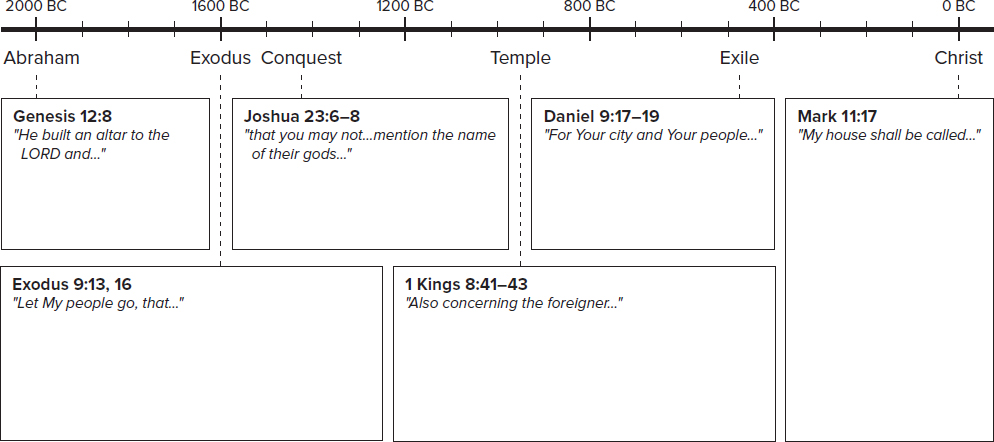
What did God do for His glory at each successive point of the story? Either finish writing out the verse in the spaces provided or add another note describing God’s actions and intentions.
IV. Practical Passion for God’s Glory Paul was motivated by the hope that God would be glorified among the nations. Paul’s mission, as described in Romans 15, was a mission that he aimed to finish. Can that be our vision today? Should it be? Hawthorne describes three changes in practice worth considering as we recognize our part in the ongoing story of God’s glory.
A. Deepen Our Motive Base. When mission is merely a compassionate response to human need, motivation can be limited to feelings of concern toward people. Some mobilization can be limited to stirring up guilt. But when mission is defined primarily as an enterprise that brings about something for God, and secondarily as that which benefits people, then our love for God sustains our love for other people. We can be deeply moved by the needs of people while acting boldly for God’s highest purpose.
B. Define the Task. Focusing on God’s glory helps us see the value of planting churches that will become expressions of the best of their particular culture. One of the best reasons for planting new churches is the distinctive worship that can come to God from different people groups.
C. Integrate Efforts. Which is more important: evangelism or social action? This is a false dichotomy, in large part answered by lifting vision beyond what happens for people (which is usually emphasized in both evangelism and social action) and aiming instead at what brings about glory, thanks, praise, and honor for God. A single vision for God’s glory can integrate and motivate efforts to serve people in their present-hour need, as well as save people from eternal loss.
 Conclusion of Certificate Readings for this lesson.
After studying this section you should be able to:
- Explain some of the biblical grounds for seeing worship that expresses specific cultures of diverse peoples as being valuable to God.
- Describe the mystery of how God is always the author of mission and yet enlists people as His coworkers in Christ.
- Explain what it means for the earth to be “filled with God’s glory” in terms of church planting.
- Explain how both an expansive and an attractive force have always been used by God to advance His mission purpose.
V. God on Mission
Henry T. Blackaby and Avery T. Willis Jr. describe God as being on mission throughout history. They use short and simple sentences to explain God’s mission as bringing about the fullest expression of praise from people because of the fullest revelation of His love.
A. God Initiates Mission. Examine the examples of God revealing what He was about to do before acting. Many times God gave His people something to accomplish, yet God Himself was the one who accomplished everything. Why does God choose to do things in this way? Blackaby and Willis assert that God desires a loving but purposeful relationship with His people.
B. Jesus: On Mission with His Father. There are countless calls to understand our mission as an imitation or continuation of Jesus’s work in the world. What Blackaby and Willis offer is something different. Take note of it. Instead of a call to imitate Jesus’s activities, they describe what it means to follow Jesus’s example as He co-worked with the Father in mission. The result was that Jesus united “His life with His Father’s mission.” Consider how you may be hearing God speak as you work through this course. How can you resolve to follow Christ’s example so that you can unite your life with Him in mission?
VI. The Worth of Each Ethnicity
In the final paragraphs of “The Story of His Glory,” Hawthorne states that God “yearns for unique expressions of righteousness, wisdom, and worship that can come to Him from every people” (p. 42). What Hawthorne refers to as the distinctive wonder of each people group is part of why Psalm 96:7 calls the “families of the peoples” to give to the Lord “glory and strength.” The beauty and worth of human cultures, even though we now see them distorted and darkened by evil, is something the Bible celebrates with anticipation. In the age to come, although the city of God is illumined by the glory of God (Rev 21:23), it will be adorned with the glories of all the ethnicities of humankind. The nations “will bring the glory and the honor of the nations into it” (Rev 21:26).
Such high regard for culture and the distinctive worth of every tribe, tongue, and people can be seen in the creation accounts of Scripture. Miriam Adeney describes how God endowed humanity to create culture and to flourish in distinctive communities. This means that the reality and value of ethnicity are rooted in creation. God prizes and delights in the cultures of humankind, even though now, because of sin, as Adeney observes, “the cultures we create reek with evil.” As we seek to fulfill our part of God’s mission, we should evaluate and value culture from God’s point of view. Mission work can be seen as helping people begin to bring God a measure of the “glory and the honor of the nations” (Rev 21:26).
Be sure to think about what Erich Sauer says about humanity being created so that they might create diverse culture, to fill the earth with artistic and cultural beauties.
VII. Witness to the World
David Bosch introduces an important phrase. Don’t let its significance be hidden by the Latin. The phrase is missio Dei, and it means God’s mission, or the mission of God. As we have seen, it is important to focus on God as the author of mission. What if it were up to human ingenuity and mercy to engineer the changes that are needed in the world? That generally describes the approach of the world outside the Judeo-Christian tradition. Think about it. Without mission, the world is a fairly bleak place. The only glimmer of hope would be our best speculations about human progress, based on vague ideas of evolution. When these ideas and others are seen to fail, the world becomes ripe with yearning for someone to be sent, for someone to redeem.
It’s no wonder that the prayer Jesus prayed was for the church to be one with God in mission so that the world would come to know that God had sent Jesus. John 17:11–23 is commonly misunderstood as if the world were to be attracted to God because God’s people enjoy relational closeness with one another. “Even as we are one” refers to a collaborative intimacy in mission rather than an essential unity or a task-free relational closeness. In any case, it is good news that God is on mission Himself. It is also marvelous that He would ever condescend to send others on His behalf. In this section we’ll seek to grasp some of the wonder of this awesome way of knowing God.
Bosch occasionally uses technical words, but the meanings are usually nearby. For example, the word “prolepsis” is followed immediately by its meaning, “an anticipation.”
A. God, the Author of Mission. Bosch explains more about the light of the servant of the Lord in Isaiah. He points out that mission works in two directions with the servant. Light flows from the servant to the nations. And in response, the nations come and are gathered into a larger people by the attractive power of the light. The main point is that God is the author. Israel never appointed itself as a missionary nation. The Jews did not have a habit of sending themselves on errands of salvation. They were called by God to do so.
B. The “Tender Mystery” of God and People on Mission. Bosch explains why both mechanisms were at work throughout both the Old and New Testaments. It would seem that the centripetal or attractive force is God’s work. A careless reading of the story at this point would lead one to conclude that centrifugal or expansive mission is humanity’s work. This is a crucial mistake. To highlight the error, he uses the almost ridiculous phrase, “God and His People as Competitors?”
To sum up the issue: If God is the author of only centripetal, or attractive mission, then that seems to imply that people need to undertake the initiative for centrifugal mission. The mistake is compounded when everyday zeal is added to the mix, or American pragmatism that assumes we can do anything if we just put our mind to it. Mission is not to be treated in this spirit. Mission is a “tender mystery” of God and people co-working, though God is always the author. Take special note of the series of paradoxes that illustrate this “tender mystery.”
This is not an inconsequential issue. There are two extremes to avoid. If God is the sole initiator, not enlisting any collaboration from people, then there is resignation: Let be what will be. On the other hand, if God’s mission is a command waiting for someone to finally be obedient, then there are waves of fanaticism: It all depends on us.
C. More than a Command. This marvelous co-working of God and His people is exactly why the Great Commission is not stamped on every page but is almost presumed throughout the New Testament. Bosch says, “Mission in the New Testament is more than a matter of obeying a command. It is, rather, the result of an encounter with Christ. To meet Christ means to become caught up in a mission to the world” (p. 57). Bosch is not saying that the Great Commission does not have tremendous force. He is saying that the entire Bible supports the Great Commission in greater ways than finding parallel statements from God issuing direct imperative commands.
VIII. Fulfilling the Missionary Task
How was Israel supposed to fulfill its mission mandate? It might appear that Israel was only to play a passive role by attracting the nations to God’s temple to worship. Some have concluded that there was not an active mandate to go to the nations until the days of the New Testament. Look again at the biblical record to see the steady, relentless plan of God—both sending His people to the nations to declare the truth of His name and attracting the nations to join His people in worship. Jonathan Lewis describes two mechanisms, or forces of mission, that were constantly at work.
A. Expansive or Centrifugal. Found throughout the story of Scripture is the outward-bound dynamic, which Lewis calls the expansive force. Others have called this the centrifugal force of missions, or a “go” structure of mission.
B. Attractive or Centripetal. There is also found throughout the Bible the inward-bound dynamic, which Lewis calls the attractive force. Others have called this the centripetal force of missions, or a “come” structure of mission.
IX. The Local Church: His Glory Made Visible
Jim Montgomery encourages many people to multiply churches throughout the world. He describes how he came to recognize that God intends local churches to bring Him glory.
Montgomery defines local churches in terms of the incarnation: The idea of Christ being embodied in His people both defines the nature of the church and the purpose of the church. Such an understanding of the church gives compelling motivation for working to see that churches are planted in every community of the earth.
Wolfgang Simson makes this hope even more explicit. He says that we should be satisfied with “nothing short of the very presence of the living Christ in every neighborhood and village” of every nation (p. 117).