CHAPTER 93
Bryant L. Myers

Bryant L. Myers is senior professor in transformational development at Fuller Theological Seminary. Myers came to Fuller after a 30-year career at World Vision International. He is the author of the book Walking with the poor.
From MarC Newsletter, March 1997. Used by permission.
Poverty is commonly defined as the condition of those groups of people we abstractly describe as “the poor.” But the poor are not abstract. They are human beings with names, made in the image of God, those for whom Jesus died. People who live in poverty are valuable to God—as important to Him and as loved by Him as those who do not live in poverty.
Why is this reminder important? The world tends to view the poor as a helpless group. The poor become nameless, and this invites us to treat them as objects of our compassion; people toward whom we have the right to act as we believe best.
For a biblical understanding of poverty, we must remember that the poor are people with names, people to whom God has given gifts and people with whom and among whom God works—before we even know they exist.
Poverty as Deficit
Is poverty deficit? By this way of thinking, poverty results from a lack of things. It is obvious that poor people do not have enough to eat, a place to sleep, or clean water. Their land is poor, there is not enough water for irrigation, the roads are poor, and there are no schools for their children.
And so, understanding their plight as deprivation, we attempt to provide what they are missing, things like food, low-cost housing, and wells.
We also recognize that some poor people lack knowledge and skills. Poor people may not understand nutrition, how to make water safe to drink, or how to read the instructions on a packet of improved seeds. They don’t know about sustainable agriculture, running small businesses, or the importance of saving money. So, we provide programs that feature education, both formal and informal. We assume that when the poor have the knowledge they lack, they will no longer be poor.
Christians tend to add another dimension to poverty as deficit: the non-Christian poor lack knowledge about God and the good news of Jesus Christ. To understand poverty holistically, Christians add the gospel to the list of other things the poor do not have.
These views of poverty are true, and, as far as they go, they are helpful. People do need things: skills, knowledge, and a chance to hear the gospel. However, limiting our understanding of poverty to this framework creates some serious problems.
When we limit our understanding of poverty in this way, we see ourselves as providers. The poor are passive recipients, incomplete human beings whom we make whole. This unwitting attitude has two negative consequences.
First, this attitude demeans and devalues the poor. Our view of them, which quickly becomes their view of themselves, is that they are defective and inadequate.
For a biblical understanding of poverty, we must remember that the poor are people with names, people to whom God has given gifts and people with whom and among whom God works—before we even know they exist.
Second, our attitude about ourselves can become messianic. We are tempted to believe that we are the deliverers of the poor and that we make their lives complete.
So if the deficit view of poverty is helpful, yet inadequate, what might we add to our view of poverty?
Poverty as Broken Relationships
A careful look at the Bible suggests that understanding the gospel in terms of relationships helps. Too often, we evangelicals limit our reading of the Bible to a legal or transactional framework that centers on our sin, God’s wrath, God’s grace in Christ, and our being forgiven. While this transactional framework is both biblical and important, it is not the only framework.
The Bible contains a lot of relational emphases. The consequences of the first sin were all relational—Adam blamed Eve, Cain killed Abel, they left Eden and were separated from an intimate relationship with God. The Ten Commandments frame social relationships. In the Gospels, the only two statements that Jesus called commandments were relational—to love God and to love our neighbor as ourselves.
Seeing the world in terms of relationships gives us new insights into poverty. This vantage point allows us insight to trace who is doing what to whom.
Poverty involves being excluded. We make people poor when we label them as the other, the outsider, the outcast. We begin the process of exclusion when we say people are lazy, dirty, uneducated, crazy, or unsafe to be around. When we withdraw because someone has leprosy or AIDS, is homosexual, has a different skin color, or comes from a different culture, we impoverish them and ourselves.
Labels and stereotypes devalue the image of God in people. This kind of poverty is powerful and debilitating, both for those who do this and for those to whom it is done.
Poverty as Misused Power
When those who have power over others use it to benefit themselves, poverty results. For example, poverty can be created when:
- the high-caste Hindu Brahmin lives out a social system that exploits the harijan (untouchables).
- a man uses the culture of machismo to legitimize drinking, womanizing, and beating his wife.
- a corporation uses its political connections to get a poor section of town condemned so a sports stadium can be built.
People in positions of social privilege are often tempted to use their power for personal advantage, ignoring the consequences of their decisions for those who have less power. Managers can misuse the power they have over their subordinates. Pastors can misuse the power they have over lay people. Even if we desire to be fair and righteous, we continually face temptations to believe that we are due certain privileges because of the positions we hold. This view makes many of us uncomfortable. It means we, too, are part of the causes of poverty.
Working against poverty within a framework of relationships is dangerous in that it demands the countercultural gospel of scandal that Paul talks about. It will anger the authorities—religious, political, economic—and even those in your own church. It will challenge and demand change in culture—both the local culture and your own.
The world cannot and will not transform political, economic, and social power into something that is pro-life, pro-poor, and pro-kingdom. Sustainable change will not come through community organizing, political processes, or more education.
Challenging the poverty-creating nature of power demands the transformational power of the gospel. It is about personal sin and social sin. Only the good news—all of it—contains the hope that the poor will someday be able to build homes and live in them.
Challenging the poverty-creating nature of power demands the transformational power of the gospel.
Poverty as Fear
One final way of thinking about poverty: you are poor when you are afraid. This is true especially when you are afraid of those who influence your future and well-being.
Some fear the spirit world, the unseen world of demons, spirits, and ancestors. Others fear those in this world who have power over them: the Brahmin, the priest, the corporation, or the professor. This kind of fear, whatever its source, is disabling.
Fear, then, is a spiritual problem. It can be dispelled only by faith in the Son of God, who is more powerful than any source of fear.
Summing Up
Once we move beyond understanding poverty as the absence of things and knowledge, we see that, at its heart, poverty is a spiritual issue. Relationships that don’t work, power that is misused, and disabling fear cannot be set aside.
Churches, missions, and Christian relief and development agencies must bring the gospel to the poor, not because it is something extra that Christians do, but because the gospel is the only source of truth and power that can address poverty for all that it really is. 
RETURN TO LESSON 12: Christian Community Development
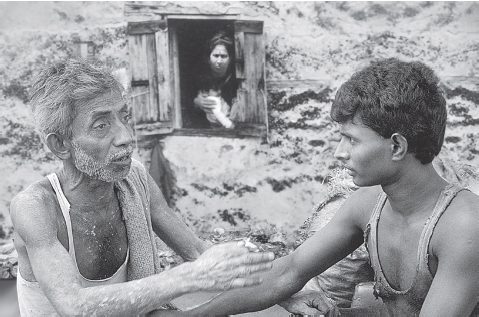
Photo courtesy of Caleb Resources.