A Movement of Christ Worshipers in India Dean Hubbard
Dean Hubbard (pseudonym) served with Youth With A Mission in the Pacific and Asia region for 26 years. For eight of those years, he lived in India with his family, helping to pioneer an indigenous ministry where his primary focus was developing and multiplying the emerging church leadership. Names of persons and people groups have been changed.
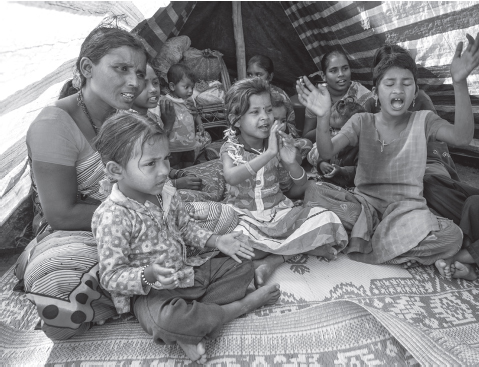
A few decades ago the gospel had attracted very few new believers in a particular district of Central India. A few years later, hundreds of newly baptized believers from at least twenty-four different people groups are learning to follow Jesus. They are gathering regularly in village-level churches under the name “Krista Bhakta Mandali”—”The Gathering of Christ Worshipers.” How did so many people suddenly turn to hope in Christ after centuries of practicing animistic spiritism blended with Hinduism?
A Key Leader
Bhimrao was a local, third-generation Christian who had been a social and political activist for impoverished farmers, serving, suffering, and going to jail with them over a period of several years. Believing God wanted him to address the deeper spiritual needs of the rural peoples among whom he had grown up, he cooperated with an Indian mission organization to open avenues for the gospel among the Kowadi people. As an agrarian peasant group, the Kowadis have largely adapted their animistic traditions to the religious practices of the surrounding rural Hindu culture. They had resisted previous mission efforts, viewing Christianity as a religion for peoples of lower social standing than themselves.
To present the gospel to the Kowadis in a way that they could understand and value, Bhimrao first confronted the failure of the two sources of power in which they had placed their hopes for social and economic upliftment: the government and their traditional gods. His message to them focused on Jesus: Since Jesus had created the Kowadis, Jesus has always been their rightful Lord and God. He loves them and is concerned about every dimension of their lives—social, economic, and spiritual. Yet they had never known his blessing because they had placed their hope in others. He had made the way for them to come under his lordship again and know his blessing, but only if they would put their hope in him.
Bhimrao spent three months explaining this message in 150 Kowadi villages. Finally, a large three-day gathering summoned the Kowadis from these villages. The days were filled with Kowadi songs, dances, and presentations of Jesus’s teaching in their language. At the end, forty-one Kowadi affirmed Jesus as “Their Lord and Lord of the Kowadi” by taking baptism. Several of them were village leaders who were now convinced that Jesus was the true answer for their people.
Opposition Tests Faith and Attests to Credibility
Hindu religious zealots immediately disrupted the intended plans for follow-up and establishment of churches. The Kowadi people, known for their timidity, appeared to with-draw from further contact with the missionaries working with Bhimrao. Bhimrao had to leave the area temporarily for the birth of his first child. When he returned three months later, he discovered that the other Indian missionaries themselves had withdrawn, discouraged and uncertain how to proceed.
Upon further investigation, Bhimrao realized that there had been some confusion following the persecution, but no lack of resolve. The new believers still wanted to follow Jesus. With few resources and little support, Bhimrao had to form a new organization to facilitate the larger intent of serving the spiritual church formation and socioeconomic development needs of the Kowadi. He called it, “Din Sevak”—”Servant to the Poor.” Bhimrao was joined by a non-Indian, Dean, and Bhimrao’s brother, Kishor, and their wives. Still, limited resources and personnel required that from the start the new believers would do most of the ministry in the villages. As a result of the witness of village locals to their own friends and family and partly helped by the publicity brought about by the initial persecution, many approached Bhimrao for an explanation.
Bhimrao’s earlier social activist work had earned him great credibility in their eyes. The false accusations of the Hindu nationalist media were doubted because of the known character and longstanding service that Bhimrao had performed throughout the region. Members of other people groups seemed to be asking, “If this is good for the Kowadi, who are so similar to us socially and economically, then will it not also be good for us?” For decades the Indian government had sought to remove caste segregation with minimal success. Now it appeared that the gospel was leaping over traditional caste boundaries by virtue of a broader identity based on socioeconomic condition. Even some of those opposed to conversion in principle opened up to the gospel along with those who were more readily responsive. As a result, doorways of opportunity began to open into a variety of people groups and their villages.
RETURN TO LESSON 10: How Shall They Hear?
“Why Should We Follow Small Gods?”
A group of potential leaders was soon identified and gathered for a week of teaching with the intention of initiating a movement of self-reproducing churches filled with worshipers of Jesus and not merely a scattering of baptized believers. Although limited in scope, it proved a watershed experience—not so much for the new believers as for Bhimrao and Dean. A visiting foreign Christian researcher conducted one of the sessions. He simply shared stories of people groups in other countries that were embracing Christ as well. At the end of the week, participants indicated that this session had been the most significant for them. “We can see now that this Jesus is greater than all other gods. All the gods we have ever known have been gods only of a village, a tribe, a region, or of the nation of India. But this Jesus, he has followers from all over the world. Why should we follow small gods, when we can follow the greatest God of all?”
God Sends “Angels”
This insight was further reinforced when shortterm teams with foreigners would come to help. One such team had located in a village populated entirely by Poharis. The Poharis are highly transient hunters who engage in animistic rituals while honoring Hindu brahminical priestcraft. They had asked for someone to come and teach them about Christ, too. But the only ones available were a short-term team of young Scandinavian women who could not have been further removed from them in almost every way.
While discussing Christ with these young women with pale skin, bright blond hair, and blue eyes, the Poharis began telling about a particular priest in their village. Five years prior he had passed through a period when most of the people thought he was crazy. He often seemed tormented by spirits. They brought him repeatedly before various gods and goddesses for healing. All the while he kept saying, “People who look like angels will come from around the world to our village. They will tell us about the real God. We should follow Him.” The team asked the priest what he saw in his vision. He said, “I saw people like you, white kind of people—they were angels. They will come and tell about God.” When they asked, “Do you think that we are those people?,” he responded, “I don’t know yet.” But after four days of listening, he trusted the Lord Jesus Christ and received him as his Savior. In the end, most of those residing in that particular village were baptized.
In spite of promising beginnings, the general timidity of the Kowadi and the remote location of many of their villages continually inhibited healthy church formation. The transient hunting activities and almost universal illiteracy of the Poharis severely undermined effective church leadership development. The bold, settled situation of the Bansaris proved a different story, though.
The Bansari number in the millions and also observe a mixture of folk religion and Hindu practices. Continued hostility toward conversions from the local press had acted like free publicity, resulting in a young, educated Bansari man coming to Bhimrao seeking help. Experiencing severe depression and contemplating suicide, he finally found deliverance in Christ. Returning to his home in a distant area of the district, he soon led fourteen friends to trust Christ. Of these, the roles of three of them proved especially effective for the extension of the gospel. One was the leader of the Bansaris in his village. Another was a leader in a family that extended into many villages throughout that area. The third was a tailor near the central bus stand where people come from all the surrounding villages. All three began aggressively evangelizing within their respective networks of relationship. As people responded, they began visiting their villages.
By this time “Servant to the Poor” had initiated a weekly time of fasting, prayer, and teaching. These men were invited to join with men and women from other people groups who gathered weekly to learn how to better serve the needs of the churches that were forming in their villages. Very soon there were too many villages with new believers for them to care for. In the earliest stages they were required to identify potential church leaders. These also participated in the training, and soon groups were meeting for regular worship in villages that were led by disciples of the first disciple.
Following Christ without Betraying Family
The earlier experiences with other people groups, both successes and failures, resulted in critical lessons that shaped the approach taken with the emerging Bansari Krista Bhakta Mandalis. Seekers were called to follow Christ, not to become members of the Christian community, which has generally come to be perceived simply as a caste in contrast to other castes. To worship Christ was not to betray, but rather to fulfill their people group’s highest destiny. This destiny was for their entire group, not just a few individuals. New seekers from different communities are routinely welcomed into these fellowships and are encouraged to focus their witness among people of their own family and caste.
One reason that the Krista Bhakta Mandali (KBM) has not been perceived as a new Christian caste is that the small gatherings of worship and teaching have been primarily peoplegroup specific. Occasional celebrations are held in which Christ worshipers from diverse castes come together to worship and partake of what is referred to as “the Lord’s Meal.” For some it is the first time in their lives that they have shared bread with people from any other caste community. The joy of sharing Christ together affirms all the finest of what they now have in common without requiring them to abandon the identity with their community. Leadership for potential churches was identified early and allowed to carry significant responsibility for the discipling of others. Those potential elders were identified primarily on the basis of initiative, faithfulness, and effectiveness in imparting the gospel. Then they were brought into the weekly training process that focused on learning foundations of a biblical worldview and simple obedience to Christ. Practical help would be given on how to break from old behavior patterns and to cope with the struggles of living for Jesus in an environment that was often diametrically opposed to his values and teachings.
All the while they would be active in witness and bearing responsibility for the welfare of new believers—not because they had been told to do so, but because they believed Jesus wanted them to do so. They were held accountable to their own declared commitment through regular reporting and coaching visits to their area of work. The role of the “Din Sevak” team members was not primarily to direct but to encourage, support, and coach the village leaders. The support was given in several ways. Regular and special training opportunities were arranged. Both Indian and multinational teams were channeled to help them minister in their villages. Language and culture-specific tools were made available and if none existed, they were created, including Scripture translation and the publication and promotion of appropriate worship forms. Seed loans for farmers and income-generating skills training for women were also implemented to limited degrees.
Persecution: Purging Then Multiplying
Unfortunately, hard lessons had preceded the later successes. A self-sustaining church has yet to develop among the Poharis. It is clear that even supernatural, prophetic preparation does not supersede the need for ongoing discipling and development. Opposition eventually took its toll on Kowadi leaders. The Bansari leaders have until now stood firm in the face of persecution, and they seem to be demonstrating the greatest potential for an actual movement of self-reproducing churches. Perhaps it is for this reason that they are now experiencing some of the greatest persecution, not so much from within their own group, but from the more traditional Hindus that surround them. Religious nationalism is gaining ground in India’s places of power. What were formerly verbal threats from local groups have given way to physical violence against some KBM village groups.
Yet, perhaps one of the most important lessons from seven years of ministry has been that opposition has invariably resulted in a “purging then multiplying” effect on the overall movement, especially when the leaders stood firm. What is intended to destroy this young movement may in the end make its spontaneous multiplication unstoppable. May it be so!
GO TO THE BEGINNING OF LESSON 12: Christian Community Development
Copyright © 2014 International Mission Board. All rights reserved.