CHAPTER 90
World Relief

World Relief has partnered with churches around the world to serve the poor and vulnerable for over 80 years. Today, World Relief works with local churches and communities in more than 100 countries offering holistic programs in maternal and child health, child development, AIDS prevention and care, agriculture, refugee resettlement, and economic development.
Used by permission of World Relief, Baltimore, MD.
When the Son of Man comes in his glory, and all the angels with him, he will sit on his glorious throne. All the nations will be gathered before him, and he will separate the people one from another as a shepherd separates the sheep from the goats. He will put the sheep on his right and the goats on his left.
Then the King will say to those on his right, “Come, you who are blessed by my Father; take your inheritance, the kingdom prepared for you since the creation of the world. For I was hungry and you gave me something to eat, I was thirsty and you gave me something to drink, I was a stranger and you invited me in. I needed clothes and you clothed me, I was sick and you looked after me, I was in prison and you came to visit me.”
Then the righteous will answer him, “Lord, when did we see you hungry and feed you, or thirsty and give you something to drink? When did we see you a stranger and invite you in, or needing clothes and clothe you? When did we see you sick or in prison and go to visit you?”
The King will reply, “Truly I tell you, whatever you did for one of the least of these brothers and sisters of mine, you did for me.” (Matt 25:31–40 NIV)
Jesus and the poor are inseparable. Beggars, the blind, the lame, the destitute, and the hungry flock to him. The New Testament records ten times when Jesus was “moved with compassion.” Each time was a personal encounter with suffering people. He embodies the message of Isaiah:
To loose the chains of injustice and untie the cords of the yoke, to set the oppressed free and break every yoke . . . to share your food with the hungry and to provide the poor wanderer with shelter . . . to clothe [the naked]. (Isa 58:6–7 NIV)
“I was hungry and you gave me something to eat.”
For one-third of the world, hunger is not merely an occasional pang felt before lunchtime. It’s a lifestyle.
- Nearly one billion people are chronically undernourished.
- Two hundred million children experience stunted growth, disease, or death due to malnutrition.
- More than thirty thousand children die every day of hunger and preventable diseases. That’s twenty-four a minute. Real children with names and siblings and dreams—kids who will never see adulthood because they lose their fight with hunger.
Poverty is at the heart of the world’s hunger. To understand the diversity of the contributors to poverty, one must analyze a web of problems—unbalanced distribution of wealth, climatic limitations, greed, lack of work ethic, over-population, political maneuvering, technological inadequacy, and unemployment. No single factor can be effectively treated in isolation. All must be dealt with.
The exasperating truth is that the world produces enough food to feed everybody, but it just isn’t being distributed fairly. The imbalance in food distribution is the number one reason a hunger problem haunts our world today. Developed countries nearly empty the food basket before passing the scraps to developing nations.
- Industrialized countries comprise only 20 percent of the world’s population but consume 80 percent of the food resources.
- In the United States, we spend billions every year on diets and related expenses to reduce calorie intake. Obesity and cardiovascular disease are rampant. Many North Americans literally eat themselves to death.
Rich industrialized countries are mostly to blame, but wealthy elites in poor countries also bear part of the responsibility. Too often, overall economic growth primarily benefits only the richest citizens of poorer countries. Some progress is made, but it rarely reaches those who need it most desperately.
There are signs of hope. Since 1970, both the percentage and the actual number of hungry people have fallen significantly in developing countries.
- In 1970, 918 million people, or 35 percent of the developing world, were chronically undernourished. By the 1990s, those figures had fallen to 841 million people, which was 20 percent of the people in the developing countries. However, since the global COVID pandemic and in areas of war, the number of undernourished people has increased.
- Microfinance/microcredit has emerged as one promising way to combat severe poverty. Small loans (beginning at as little as $10) enable poor people to establish small businesses like food stalls or handicrafts. The income generated by these businesses allows people to pay off their initial loans and meet their financial needs. Many applicants then apply for a larger loan and expand their business, providing greater profit for themselves and their families, as well as offering employment to others in the local community. Money that is repaid can be reloaned over and over again so that an initial investment is multiplied many times over. Research is proving that microfinance is reducing the vulnerability of the poor—children are receiving better nutrition, more kids are in school and families have better healthcare.
“I was thirsty and you gave me drink.”
Water is the most precious of all resources, a vital necessity of life. A human being cannot live more than a few days without it. It comprises 90 percent of your blood, 80 percent of your brain, 75 percent of your flesh, and 25 percent of your bones.
Besides being essential for drinking, water serves a critical role in food production, food preparation, and hygiene. Removing water from any of these is like snapping a bicycle chain in half and expecting the bike to run smoothly. Imagine trying to grow a garden, fix dinner, or wash without water, or with water infested with parasites and waste products. You might as well wash with mud.
Yet over two billion people in our world lack access to clean water.
In most developed countries, if you want an abundant, clean water supply, you just turn on your faucet. In developing countries, people often travel miles on foot to get a jug of water. It may well take half a day to make the trip. In other countries, even a halfday trek won’t lead to water. There simply isn’t any.
Two sides of the water supply problem plague developing countries: quantity and quality.
Water shortages parch regions with arid climates like those in Africa and India. In the Sahel region of Africa, the desert is creeping southward at a rate of around nine miles each year, scorching everything in its path.
Quality is the other half of the water supply dilemma. Even where water is available, it is frequently useless due to the damaging elements in it. Diseases that are spread through impure water may cripple and kill. Contaminated water is the main agent in transmitting typhoid, cholera, and bacillary dysentery—prevalent diseases in developing countries. Ignorance of hygienic practices is part of the problem. In many areas of the world, the same water is used for washing, bathing, and drinking.
Water pollution is more common in rural areas than urban. The most common contributor to pollution is organic human and livestock waste. Soil erosion and runoff of fertilizers and pesticides in farming areas also pollute the water supply.
Research is proving that microfinance is reducing the vulnerability of the poor—children are receiving better nutrition, more kids are in school and families have better healthcare.
Ironically, the more industrial and commercial development there is in a country, the more likely it is that chemical waste will pour into rivers and streams, leading to pollution. Industrialization and development may increase the gross national product of a country, but they may also mean more polluted water for the thirsty poor. Growing populations, industrialization, and food production will all increase the demand for clean water.
“I was a stranger and you invited me in.”
Refugees are persons who have felt compelled or have been forced to leave their homes. Unable or unwilling to return, many remain in a homeless limbo. According to the United States Committee for Refugees, they are the “ultimate victims of war and oppression. Too often . . . the forgotten by-products of ideological disputes, political repression or a foreign policy gone awry.”
In most cases, they have fled because of war or civil strife. Persecution because of race, religion, national origin, or group affiliation may have precipitated the move. Oppression or lack of protection by a new or weak government may propel people to leave their country.
Every continent harbors stateless or homeless victims of war, intolerance, and social unrest. Because small percentages of refugees manage to return home or become viably resettled each year, and because vast numbers of new refugees continually emerge, the world refugee situation is constantly changing. Statistics on refugees and other displaced persons are often inaccurate and controversial. One country’s refugee is another’s illegal alien. Today’s internally displaced person may be tomorrow’s refugee. The United Nations High Commissioner for Refugees (UNHCR) estimates the number of forcibly displaced people in 2024 is about 110 million. Numbers of refugees have risen dramatically in the past decade and are expected to continue to rise.
Refugees are often in desperate need. The extent and specifics of that need depend on the reasons for dislocation, the understanding that individuals have of the forces acting upon them, the degree of violence and deprivation encountered, and the speed of resettlement. Yet the majority of refugees suffer from poor health, little food, inadequate shelter, and no money. A complex mixture of emotional problems results from culture shock and other frustrations.
There are signs of hope. Habitat for Humanity will soon be the largest private house builder in the world. They have already helped 59 million people around the globe to build or improve their homes. World Relief alone has resettled hundreds of thousands of refugees, showing local churches how to build their own “Good Neighbor Teams” that help refugees find shelter, productive employment, and a new life in a safe environment.
“I was naked and you clothed me.”
Imagine that one night as you sat down to dinner, the blasts of gunshots and screams invaded your dining room. Looking outside, you discover homes blazing with fire and neighbors bleeding in the street. A band of angry men streams toward your house. The only possible escape is an immediate one. You leave everything you own—home, food, clothing—and run for safety. Episodes like this interrupt the normal pulse of life in countries around the world when disasters like war disrupt a nation. Most notable today is Darfur, Sudan, where whole villages are burnt down, forcing families to flee.
In addition to these manmade disasters, other violent events, like natural disasters, leave thousands of people homeless and in need of assistance in their own countries.
More than 90 percent of all loss of human life and damage to the environment is the result of four main natural hazards: drought, floods, tropical cyclones, and earthquakes. Over half of all natural disasters originate with meteorological events including storms, floods, droughts, and temperature extremes.
In disaster-prone developing countries, these events often serve as enormous barriers to economic growth, sometimes canceling out any hard-won increase in gross national product, or actually causing a loss.
In terms of the human toll, natural disasters kill thousands of people each year, sometimes causing disease and injury for tens of thousands more, and leave hundreds of thousands homeless.
Immediately following a major disaster, food and water supplies may be cut off or contaminated. Electricity and gas supplies are often involved in explosions and fires and are therefore cut off. Medical supplies and hospitals may be destroyed. The aftermath may also involve epidemics spreading through contaminated water, destroyed sanitation facilities, and large numbers of the dead. Economic loss of property, crops, and personal possessions usually amounts to billions of dollars. For developing nations, the economic impact can be devastating.
Total recovery from a disaster usually requires outside help that extends beyond the initial relief response. The minimum goal may be to restore normal pre-disaster conditions. Yet in developing countries, “normal conditions” frequently include malnutrition, disease, and economic deprivation. True need often goes beyond the consequences of the disaster alone. Thus, the goals of rehabilitation must aim at higher than pre-disaster living conditions.
The majority of refugees suffer from poor health, little food, inadequate shelter, and no money.
“I was sick and you cared for me.”
Malaria, tuberculosis, and parasitic infections invade and destroy millions every year. Millions die every year from preventable diseases. Diseases now rare in developed countries continue to kill people in countries where immunizations are not available. Even diseases like tetanus and measles often result in death in these countries.
Life expectancy is one of the most reliable ways to measure the health status in a country. The average life expectancy in developing lands is fifteen to twenty-five years less than in developed countries.
Three basic types of diseases dominate developing countries: fecally related, airborne, and vector-borne.
The most widespread diseases are fecally related, i.e., diseases transmitted by human feces through unsanitary waste disposal. These include parasitic and diarrheal diseases like typhoid and cholera.
Airborne diseases comprise the next largest group. These spread through persons breathing airborne respiratory secretions of infected persons. Examples are tuberculosis, pneumonia, diphtheria, bronchitis, whooping cough, meningitis, influenza, measles, smallpox, and chicken pox. Although most are preventable, they transform into killers in countries where medicine and doctors are inaccessible.
The third group of diseases is less common, though still a sober and deadly reality in developing countries. These vector-borne diseases, which are transmitted by insects, include malaria, sleeping sickness, and river blindness. Sexually transmitted diseases form another group of pre-ventable diseases. The vectors that carry these diseases are people.
Fecally related, airborne, and vector-borne diseases share a common cause: poverty. Crowded, unsanitary living conditions underlie the origin and spread of these diseases. These conditions include water teeming with parasites, families of five or ten crammed into tiny tin shelters, inadequate diets, ignorance of nutrition and hygiene, and inaccessible immunizations or preventive health care. Most uneducated people in developing countries do not know the connection between unsanitary waste disposal and concurrent illnesses.
Even if these roadblocks to health could be removed, simple health care is a fleeting mirage to more than 80 percent of rural areas and poor urban sections. Efforts to alleviate disease are usually concentrated in major urban areas. Large hospitals are frequently built in places out of the reach of the rural poor. One out of every four people in our world today lacks access to basic health services. But there are signs of hope in disease prevention:
Nearly two-thirds of all Christians alive in the world today suffer persecution in varying degrees, including the loss of freedom, discrimination, imprisonment, slavery, and torture.
- In 1981, in some areas of Africa, 40 percent of all adults lost their sight to river blindness by the age of forty. At that time there was no real hope in sight. There is now a pill developed by the Merck Company to treat river blindness. The Carter Center distributes it. Five hundred million people have received the treatment to date. River blindness has been eradicated in five countries so far.
- Diarrhea used to be the number one killer of children. Over the past decade, efforts to train mothers in simple oral rehydration techniques have saved hundreds of thousands of children from this fate.
- In 1980, only 20 percent of the children in developing nations received immunization for typical childhood diseases. UNICEF reported in 2022 that, the most recent statistics show that global immunization rates, as measured by coverage of the diphtheria, tetanus, and pertussis vaccines, are now close to 90 percent.
“I was in prison and you came to visit me.”
Saleema, a teenager, sits in a Pakistan prison. Months ago she shared her Bible with Raheela, a friend of hers from a Muslim background. Raheela came to believe in Christ and, fearing that she would be killed by angry family members, went into hiding. Saleema was then accused of helping Raheela escape. Saleema was imprisoned, repeatedly raped, and beaten.
Raheela was eventually found by religious authorities. She refused to renounce Christ and was therefore publicly executed. The Islamic authorities have now charged Saleema with murder. Why? They reasoned that had Saleema not given a Bible to Raheela, Raheela would not have followed Christ and been executed for apostasy from Islam. Saleema will also be executed if found guilty.
Cases like Saleema and Raheela are on the rise. Because prisoners of conscience are often charged with political or criminal crimes, it is almost impossible to assess how extensive the imprisonment of Christians may be.
International Christian Concern reports: “More Christians are persecuted and martyred for their faith in this [twentieth] century than all previous centuries combined. Nearly two-thirds of all Christians alive in the world today suffer persecution in varying degrees, including the loss of freedom, discrimination, imprisonment, slavery, and torture.”
House church leaders are routinely imprisoned and tortured in China. Some have been placed in the same cell block with violent criminal prisoners with the expectation that such leaders would be beaten and abused. In one case, the Lord protected a house church leader by granting him favor with a criminal “leader” who had a Christian relative. The imprisoned church leader soon led several prisoners to the Lord. The authorities finally placed the church leader in solitary confinement.
What Can We Do?
In a world of desperate need, we ask ourselves, “What can we do about such vast and all-encompassing problems?” The child who recommends sending his dinner leftovers to hungry people elicits chuckles from wiser generations. Too often we adults answer this with, “Nothing. I can do nothing about all the suffering in the world.”
It is easy for us to become lulled into inaction by the belief that these overwhelming problems lie beyond our realm of control.
The needs of the poor—and the rich—go beyond the physical and the psychological. They are spiritual as well. The most effective development plans meet the needs of the whole person. Such plans do not come easily. Furthermore, there are so many individuals suffering from so many different problems.
The problems in the world today will not be solved by the actions of one or two people. But, collectively, individuals can respond to them in a significant manner. While you or I may not be able to solve these problems alone, we need to respond as God has commanded us to, in Jesus’s name. In other words, what we really believe in, we will act on. Everything else is just so much religious talk. God never intended for the righteous to sit idle while the restless poor struggle for survival. And we dare not exit at a point where their survival is assured but their eternal destiny is not.
“Whatever you did for one of the least of these brothers of mine, you did for me.”
The problems are worldwide, but individual responses are eternally significant. A loaf of bread. A cup of clean water. A shelter. The gospel lived out and proclaimed. These actions are immeasurably important to someone who is hungry, thirsty, or homeless.
The words of Jesus invite us to respond to the dismal state of the world: “Whatever you did for one of the least of these brothers of mine, you did for me.” 
RETURN TO LESSON 12: Christian Community Development
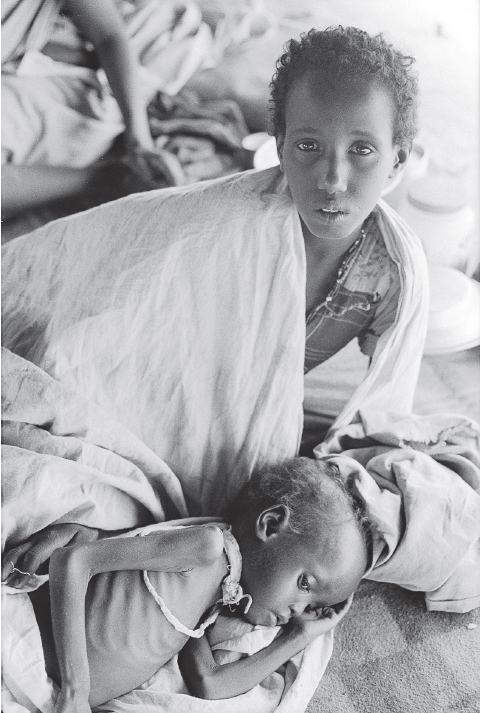
Photo Courtesy of Eric Mooneyham, Duarte, CA.