CHAPTER 84
Accelerating toward the Finish
R. W. Lewis

R. W. Lewis worked with her father, Ralph Winter, to develop graphics about the least reached peoples. She took the first Perspectives course (the Summer Institute for International Studies) in 1974 and then helped run Student Conferences on World Evangelization at Caltech, graduating in 1977. She has spent the last 50 years on overseas teams and in leadership focused on frontier peoples.
In 1974, while preparing his speech for the first Lausanne Congress on World Evangelization, Dr. Ralph D. Winter realized that thousands of people groups were being completely overlooked by mission agencies and churches around the world. Due to the great success of outreach in places like Korea, sub-Saharan Africa, and island and jungle tribes, some were insisting that missionaries were no longer needed. Others insisted that missionaries should only partner with and serve the national churches, not realizing that national churches did not exist in many countries or people groups.
At Lausanne, Winter reported that 60 percent of the world’s population, including 87 percent of the world’s non-Christians, lived in people groups with no churches of their own and little to no missionary work yet among them. In light of this problem, Winter claimed cross-cultural “pioneer” mission work was the highest priority of the global church.
Winter expected other leaders to readily embrace this priority. Instead, mission agency leaders responded with disbelief and even resistance, and many churches showed little interest. Yet this new awareness had gripped Winter, and he realized a concentrated effort was needed to awaken churches and mission agencies to these “hidden” people groups. So, he resigned from the School of World Mission at Fuller Theological Seminary and dedicated the rest of his life to clarifying and mobilizing for what he called the “frontier mission” task: going where there was no sign of gospel understanding or progress, “where Christ had not been named” (Rom 15:20 BLB).
Seeing the Task Graphically
When Winter put his statistics into a pie chart titled “Penetrating the Last Frontiers,” people finally began to understand. The purpose of this chart was to help people see how many in the world had no chance of learning about Jesus from someone in their own people group. He divided the world into areas by population, with each section illustrating how far the gospel had penetrated in that cultural/geographic portion of the world by showing (1) committed Christians able to share the gospel with others, (2) nominal Christians, (3) culturally near non-Christians, and (4) those beyond the reach of existing churches. He noted that nominal Christians and many nonbelievers could hear the gospel from the believers in their own culture. But “culturally distant” nonbelievers were beyond the evangelistic outreach of any believers because they lived in people groups with very different languages, cultures, and identities in which there were no fellowships of believers like themselves.
As a result, thousands of people began to pressure their churches and mission agencies for new efforts to reach these overlooked people groups. Some decided to go themselves, and some founded new agencies for this purpose. Many existing agencies revised their strategic vision to focus on the new frontier of unreached peoples. An unreached people is a people group that lacks a viable church to evangelize the rest of the group without outside assistance. The “all peoples” paradigm became the dominant paradigm in mission and has been for the last fifty years.
In the 1990s, researchers began to collaborate to identify every unreached people group (UPG), with the goal of mobilizing cross-cultural witnesses to work within them. For pragmatic reasons, researchers began using the criteria of people groups with less than 2 percent evangelicals (two out of every one hundred people) as the cutoff for an unreached people group, rather than the absence of a viable indigenous church, because the latter was more subjective and harder to verify.
But an analysis in 2018 revealed that many of the UPGs that were still less than 2 percent Christian already had established movements to Christ within them. It is not hard for a large group to have many churches, or even multiplying church movements, and still have less than 2 percent Christian adherents. However, researchers do not currently have a way to quantify movements by tracking growth over time. While they do take into account firsthand reports, they do not have a way of systematically collecting them for all peoples. Therefore, it was decided to use a threshold of less than one Christian per thousand and no confirmed, sustained movements. Groups that meet this criterion have recently been labeled “frontier people groups” (FPGs) to distinguish them as groups that need pioneering work because there are few, if any, believers or churches with whom cross-cultural witnesses can partner.
The two pie charts below compare the world using the same criteria in 1974 and 2024 and are sized to reflect the global demographics.1 During this fifty-year period, the world population doubled, and the followers of Jesus increased by 400 percent, while those living in FPGs decreased from 2.4 billion to 2 billion people. The outermost sections in both charts represent those living in groups with little witness and no known movements to Christ. In just fifty years, the percentage of the global population living in FPGs decreased dramatically from 60 percent to 25 percent. While we rejoice in this amazing progress, we must press on until all peoples are reached.
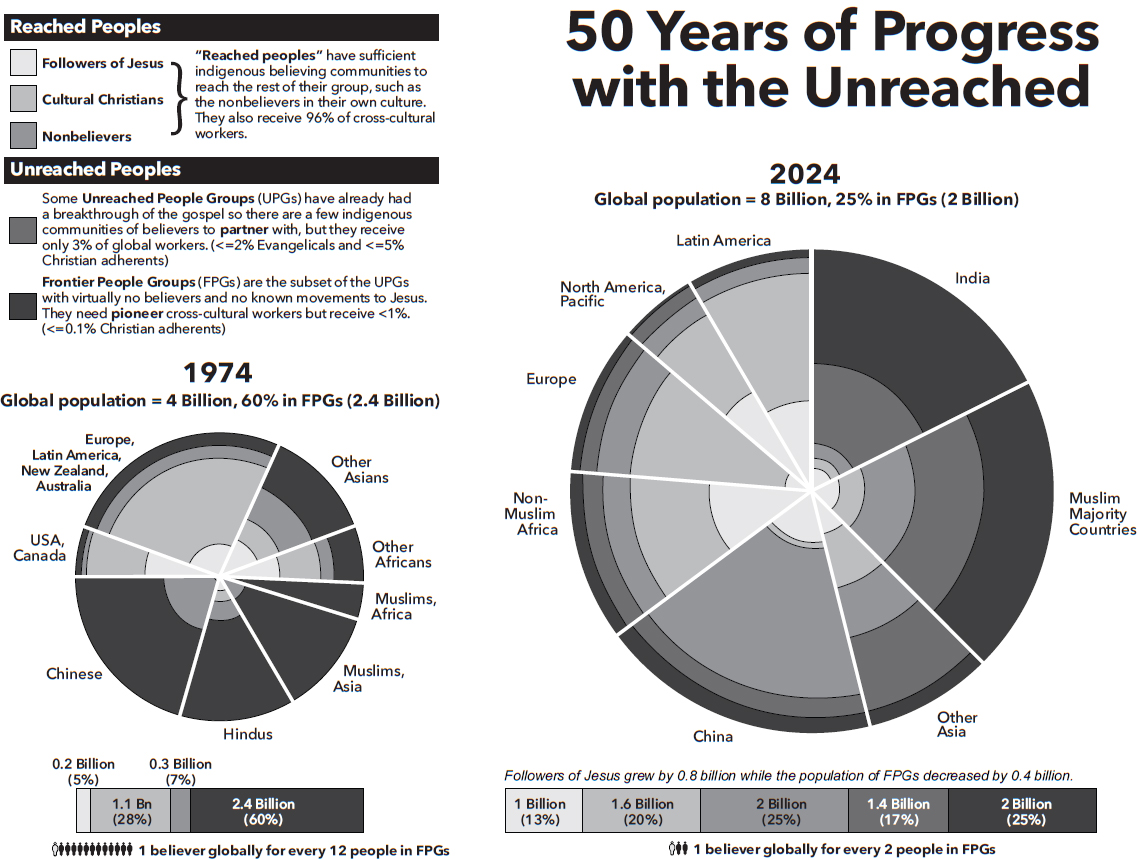
Figure 1. The World. Used by permission of R. W. Lewis. joshuaproject.net/greatprogress.
Fifty Unbelievable Years (1974–2024)
In each generation, God has been fulfilling His promise to Abraham, to bless all the families of the earth, by calling some, like Paul, to such pioneering outreach. Yet most followers of Jesus have given little thought to people groups beyond their own. Far too few in each generation have embraced Jesus’s command to disciple all people groups (Matt 28:19).
Nevertheless, since Pentecost, the good news of Jesus has been steadily spreading into a growing number of people groups through pioneer witnesses called out by God (see figure 2). In 1792, the Holy Spirit empowered William Carey, a simple shoemaker, to calculate and reveal that the gospel had spread to only 25 percent of the world’s population. To reach the other 75 percent, Carey urged believers to come together and form mission societies to take the gospel to distant lands. After 250 years of virtually no Protestant mission outreach, his analysis led to an explosion of new agencies, greatly accelerating the advance of the gospel among new people groups.
Nearly two centuries later, in 1974, Ralph Winter’s Lausanne address helped to launch a movement to reach the vast majority of non-Christians who were effectively cut off from the gospel. Early researchers estimated that 60 percent of the world’s population beyond the reach of existing churches were divided into approximately seventeen thousand people groups. This stirred many in the global church to embrace a vision for “a church for every people.” The greatest gospel advance in history came as a result of this focus on God’s promise to bless all the families of the earth (Gen 12:3; Gal 3:8).2 Global attention to overlooked people groups continues to fuel accelerating progress, particularly as the church in the Global South embraces its calling to be a witness to all peoples.
In 2024, the best available data showed that at least twelve thousand formerly unreached people groups (UPGs) now have church movements, leaving only five thousand of the original seventeen thousand without movements. Same-culture witness is now possible among 75 percent or more of the world’s population. Yet still, 25 percent of the world lives in people groups without a spreading indigenous community of believers.
RETURN TO LESSON 9: The Task Remaining
Overcoming Barriers to Frontier People Groups
Over the last fifty years, new movements to Jesus have developed among Buddhist and communistatheist people groups in East Asia, as well as in tribal groups with ethnic religions, such that there are almost no FPGs left among them. In the last few decades, the new movements have primarily occurred in Muslim and Hindu people groups, although most are still largely untouched. These people groups with movements to Jesus are still considered “unreached” until at least two out of every one hundred people (2%) are evangelical. All UPGs have very few Christian workers compared to reached people groups. FPGs still need specialized cross-cultural pioneer workers trained to disciple the first households to follow Jesus together and support the growth of movements. Unfortunately, most FPGs are not adequately engaged, even by those agencies focusing on UPGs.
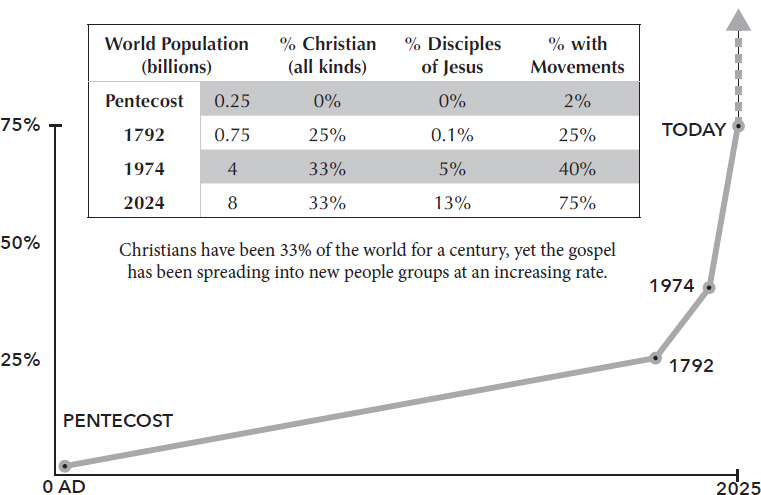
Figure 2. Percentage of World Population in People Groups with Movements to Jesus. Used by permission of R. W. Lewis. joshuaproject.net/great progress.
Reasons Frontier People Groups Are Often Overlooked
1. Access
Most FPGs live in places that are difficult to access politically and geographically, and less than 3 percent of the total population of FPGs are in diaspora groups, often in Muslim countries. However, past generations also faced extreme access problems and were often martyred as they engaged with violent tribal groups or vicious civilizations, from persecutions in ancient Rome and Persia to modern communist states. Each generation has had to figure out how God wants to give them access to the UPGs of their times.
2. Religions
Most remaining FPGs are members of large religious blocs that provide a global identity and view Christianity as an opposing religion allied with Western political powers. Of the global FPG population, 97 percent are either Muslim (56%) or Hindu (41%). The world’s agnostics/atheists mostly live in reached people groups alongside many Christians. Some focused efforts to eliminate cultural barriers preventing Muslims from following Jesus have resulted in some movements to Christ; however, at this point, the caste Hindu groups, including the 600 million people in Other Backward Castes (the largest group of Indians that are between the Forward Castes, or “upper castes,” and the Dalits, “outcastes” or “untouchables”) have very few witnesses among them.
3. Fears
Many FPGs are aware of and respect Jesus but see him as the savior of just the Christians, not of the whole world. They fear that putting their trust in Jesus will bring shame on their family and community and that they will be ostracized. Those who come to faith in diaspora settings often become secret believers with respect to their families. Fear of becoming socially unclean, instilled by the caste system of India, makes it difficult for Christian tribals and Dalits to reach out to families inside the traditional Hindu caste system.
4. Lack of Clarity regarding Frontier People Groups
Within efforts to mobilize for UPGs, it is not always clear which people groups are still waiting to hear about Jesus for the first time and which UPGs might have movements underway or churches available for partnership.
5. Lack of Clarity about the Frontier Mission Task
Today, few training programs prepare pioneer workers to start Jesus movements in groups untouched by the gospel. Instead, they train people to look for believers to partner with—not possible in most FPGs. In megacities, church planting has shifted from establishing the first community of believing families in a specific people group to starting Western-style churches that aggregate existing believers from many people groups. These multiethnic (but some-what monocultural) urban churches usually fill up with people from various reached people groups and marginalized members of UPGs, rarely resulting in movements that spread in FPGs.
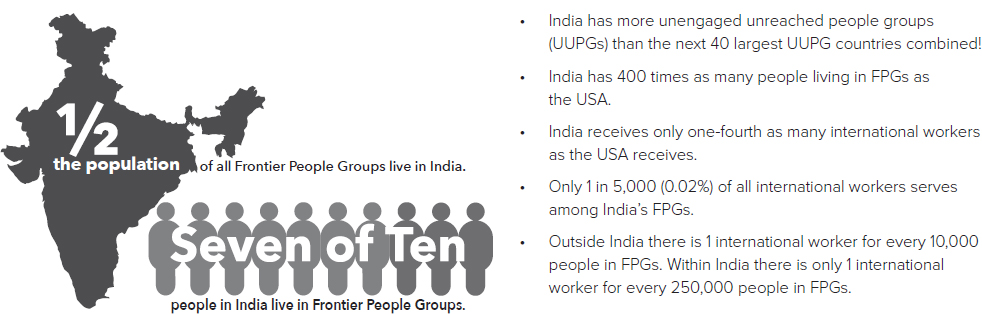
Figure 3. The Surprising Challenge of India. Used by permission of R. W. Lewis. joshuaproject.net/greatprogress.
6. Shifting from Pioneering to Partnership
Churches bypassing agencies and partnering with believers in UPGs has become a popular church-to-church mission strategy. In addition, many new agencies specifically focus on supporting national believers in countries where there are believers. While good, such partnership strategies direct mission workers away from FPGs with no believers to people groups that already have believers and churches.
7. The Shift to Short-Term Workers
Mission dollars and interest have shifted from long-term workers to short-term teams who don’t learn local languages or go where there are no churches. Short-term trips have risen exponentially since 2000, but few participants return to work long-term among FPGs. Even “career” missionaries today rarely stay more than five to ten years.
8. The Shift from Implanting the Gospel to Extracting Believers
In most of mission history, workers learned the language of a people group, communicating the gospel with families who came to faith. New believers in tribal areas were never removed to other Christian tribal groups—no matter how evil the tribe, even if some witnesses or new believers were killed. However, today, new believers from groups aligned with global religions are often encouraged to flee from their families and persecution and integrate into another people group where Christians are relatively safe. The result is that no progress of the gospel is made among the original people group. The gospel is not implanted; instead, the believers are extracted. No people group in history has seen significant numbers of people follow Jesus without an indigenous movement developing at some point.
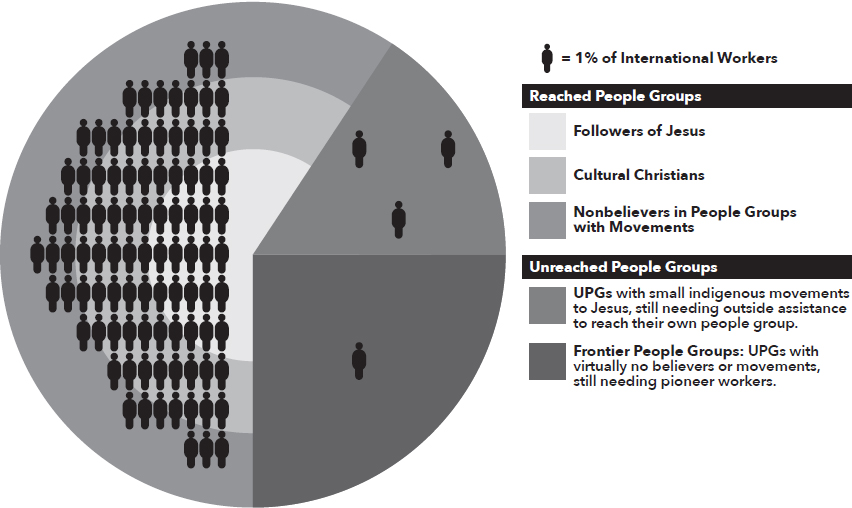
Figure 4. Distribution of International Workers. Used by permission. joshuaproject.net/greatprogress.
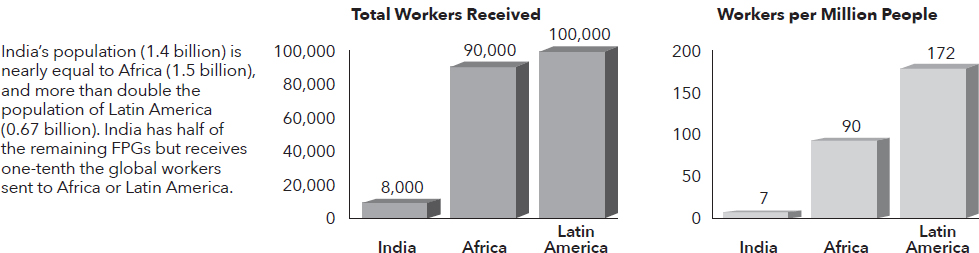
Figure 5. International Workers Received: India vs. Africa and Latin America.
Sources: JoshuaProject.net, Global Status of Evangelical Christianity (IMBTSBC), atlas of Global Christianity (Todd Johnson), Operation World (Jason Mandryk).
Why India Has So Little Progress
India has a low percentage of Christians, despite nearly two thousand years of Christian outreach. The barriers to the spread of the gospel in India are unique. In much of the world, people groups are based primarily on ethnicity and language, often living in specific geographic homelands. But in India, people groups or castes (except in the tribal areas) were traditionally and rigidly defined by profession. Therefore, they are spread throughout the country and composed of diverse ethnicities. The caste identity continues even with changing professions. Strong prejudices hinder social interactions and the spread of the gospel, even within the same village. In a similar manner, India’s Muslim people groups are also categorized in castes based on their traditional professions. India has more Muslims than the Middle East (200 million), and after Indonesia, it is the second-largest Muslim country in the world. Over 40 percent of the FPGs are Hindus—virtually all of them in India. So, though there has been a long history of movements to Christ in India among tribal peoples and Dalits, only recently are we seeing movements starting in the one billion people in India’s FPG Muslim and Hindu caste groups, and other religions such as Jains, Sikhs, and Buddhists.
The Great Imbalance
The apostle Paul wanted to fulfill God’s covenant by going to people groups where Jesus was not yet known. But today 96 percent of international Christian workers go to “reached people groups,” where nearly all the world’s believers live. Only 4 percent go to UPGs in general. Of these, 3 percent go to the UPGs that already have believers and churches that outside workers can partner with, but only 1 percent pioneer work within FPGs.
India’s population (1.4 billion) is nearly equal to that of Africa (1.5 billion) and is more than double the population of Latin America (0.67 billion). India has half of the remaining FPGs but receives one-tenth the global workers sent to Africa or Latin America.
Key Languages and Countries of Frontier People Groups
It is important to consider what languages new workers need to learn for greatest access to FPGs and other UPGs. Seven of the top ten languages spoken by FPGs and other UPGs are South Asian languages. Furthermore, Hindi and Urdu are so similar that learning either language equips the learner to work among the 700 million people who speak one of those languages.
The three hundred largest mega-FPGs (those over 1 million in size) are distributed among just 40 of the world’s 193 countries. More than half of these mega-FPGs are in India. Pakistan runs a distant second with 41 mega-FPGs. Other countries with mega-FPGs each have eight or fewer. This tells us where pioneer workers are most needed.
Bringing God’s Blessing to FPGs and UPGs in Megacities
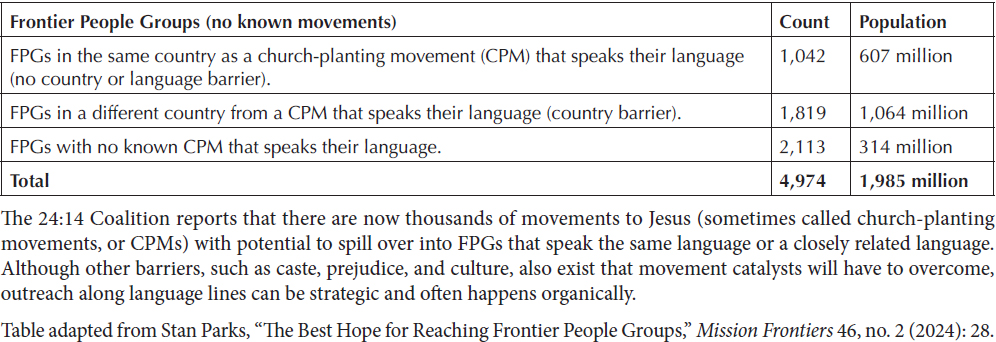
Today’s megacities draw people from rural homelands and other countries. Most diaspora immigrants in the West come from reached people groups. However, some global megacities include people from many UPGs, including FPGs. These immigrants are often isolated in ethnic neighborhoods with their own networks. Urban churches in these cities have opportunities to start family-based movements in the languages and communities of these UPGs by praying for them and pursuing movement training.
Table 1. Movements with Potential to Spread to Frontier People Groups
Encouraging Movements in Urban Ethnic Communities
In megacities it is common to gather individual believers from Christian people groups into multiethnic churches using national or regional languages, creating a new social structure unto itself. The gospel rarely reaches back to the families of the individuals from UPGs and FPGs they came from, especially if they are from other religions such as Islam and Hinduism. The significant cultural forces that create cohesion and limit deviation in UPG communities mean that few will be comfortable joining a multiethnic church. If they do, their communities often reject them rather than embrace Jesus themselves. However entire UPG communities can be impacted when the gospel is introduced into family networks and preexisting communities through home-based discipling movements.
Strategic Considerations
Where is the greatest need today? About 70 percent of the global population of FPGs (1.4 billion) live in South Asia. Half are in India alone (1 billion). Of the global FPG population, 97 percent are either Muslim (56%) or Hindu (41%). All the data is rapidly changing as new means of collecting information are developed, so check the Joshua Project website for updates.3 But the big picture is relatively constant.
In addition, 80 percent of the population of all FPGs (1.6 billion) live in roughly three hundred mega-FPGs, each containing over one million people. Due to their size and influence, these groups are especially strategic. These mega-FPGs are shown by their geographic location and religions—almost all are Muslims and Hindus.
Prioritizing the Mega–Frontier People Groups
Rapid progress can be made in working with God to fulfill His promise to bless all the families of the world by starting movements to Jesus in three hundred mega-FPGs—1.6 billion people, 80 percent of the total population of all FPGs. Within this 1.6 billion, almost a billion live in the 37 largest FPGs (over 10 million in size and up to 135 million).4 These largest FPGs can be seen on a map and sorted by language, religion, country, size, and cluster. If you click on the circles or on the name of a people group, Joshua Project provides a full description and many important facts about each group, like Bible translations, the languages spoken, and other groups in the same cluster.

Scan the QR code to use the interactive map.
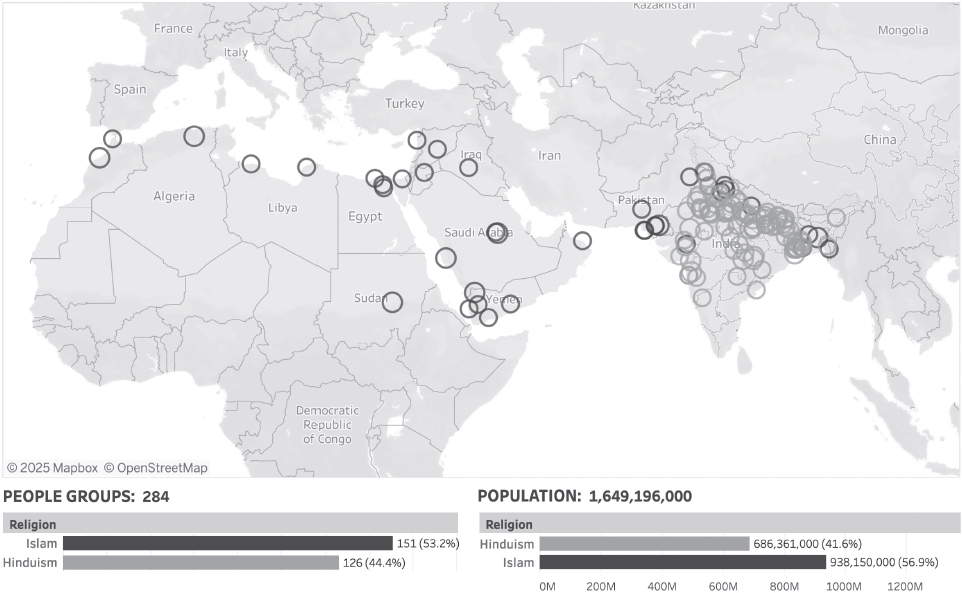
Figure 6. 300 Mega–Frontier People Groups by Religion. Used by permission of Joshua Project. joshuaproject.net/frontier/interactive.
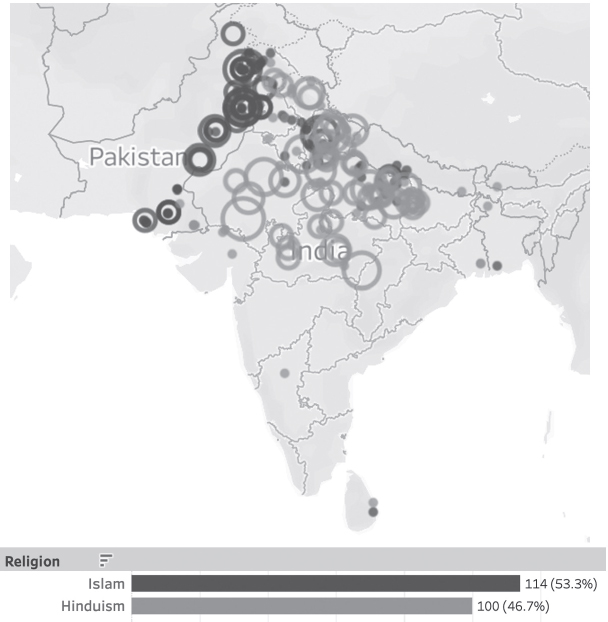
Figure 7. 214 Rajput People Groups. Used by permission of Joshua Project. joshuaproject.net/frontier/interactive.
Movements Can Spread through People Group Clusters
The mega-FPGs have tremendous influence over other related FPGs in their cluster. The Rajput people groups are a good example of FPG clusters, where movements that started in larger groups can lead to movements in smaller related groups. As seen in figure 7, there are 214 Rajput FPGs—some Muslim and some Hindu. Of these, 1 group is over 10 million and 9 other groups are over 1 million (largest circles). Once movements begin in the largest Rajput groups, they can potentially send believers to the 204 smaller Rajput FPGs of the same religion.
Dozens of similar clusters exist, like the Brahmin, Jat, Malay, Yadav, Dhobi, and Pashtun. The Brahmin, for example, have 1 group over 10 million, 7 other groups over 1 million, and 118 smaller groups. Thirty-three of the groups are located outside of India (all Hindu). Such clusters reveal why sending additional workers to work cross-culturally among these three hundred mega-FPGs is a priority for the global church.
Conclusion
God has been calling each generation to partner with Him in bringing salvation and eternal life through Jesus to the diverse mosaic of humanity. Thanks to research, today we can see more clearly than ever those groups that are still being overlooked. By working with families, communities, language families, and people group clusters, movements can spread rapidly along trust networks.
God will fulfill His promise to bless all the families of the earth through Abraham’s descendants by faith. There has been a stunning acceleration toward this fulfillment in the last fifty years as the global church has become aware of the need to see and reach the world in terms of peoples. As families and communities come to faith in each new people group, they in turn join the global workforce, bringing the good news where Jesus is not yet known.
Passion for Christ to be glorified within every people has emerged on every continent and in nearly every country. The capacity of the global church is more than sufficient for the task. With a strategic focus on the remaining FPGs and the guidance and empowerment of the Holy Spirit, we are likely to see some from every tribe, tongue, people, and nation worshiping God fulfilled in our generation. 
RETURN TO LESSON 9: The Task Remaining
Notes
1. In subsequent years, the pie chart was organized around major blocs with dominant religion as the primary cultural feature (Muslims, Hindus, Buddhists, etc.) rather than organizing by hybrid geo-cultural blocs. The result was that the geographic concentration of UPGs was obscured. The 2024 chart marks a return to the previous approach.
2. The original idea of all of humanity being divided into families or clans evolves throughout the biblical narrative to use other terms for identifying human groupings—nations, tribes, peoples, and languages—which allows for a fluidity in recognizing different variables for group cohesiveness in different contexts.
3. “Frontier Unreached Peoples,” Joshua Project, joshuaproject.net/frontier.
4. The prayer guide “The Thirty-One Largest Frontier People Groups” is available at Go31.org and BlessFrontierPeoples.org.