CHAPTER 100
Evangelization of Whole Families
Wee Hian Chua

Wee Hian Chua was the senior pastor of Emmanual Evangelical Church in London, England. He served as the general secretary of the International Fellowship of Evangelical Students from 1972 to 1991.
From Let the earth hear his Voice, 1975, World Wide Publications, Minneapolis, MN. Used by permission of the Lausanne Committee for World Evangelization.
Westerners have sometimes approached Chinese society, finding that the easiest relationships to form were with individuals. There can be helpful conversations, but such an approach is rarely effective. Decades ago, a Chinese group of churches sent out entire Christian families to present the gospel in distant parts of China. The heads of these families shared their faith with the elders of the villagers. The grandmothers could informally transmit the joy of following Christ and of their deliverance from demonic powers to the older women. The housewives in the markets could invite their counter-parts to attend their church gatherings. This movement was effective, planting dozens of new churches.
Evangelizing Families in Other Cultures
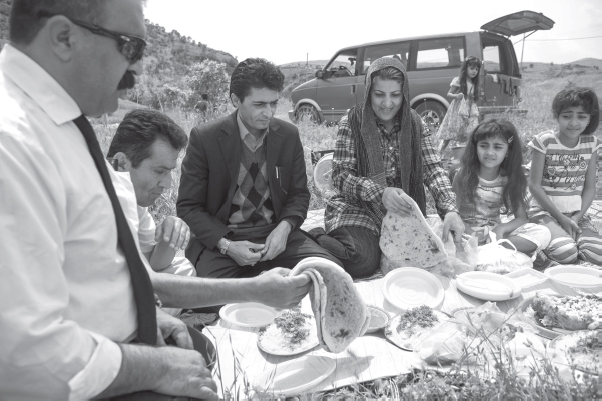
The strategy of evangelizing whole families is not only applicable in Chinese communities. It is also effective in other Asian communities, African villages, and tribes, as well as in Latin American barrios and societies. One missionary described his work in Korea: “One of the most important factors governing how the church grew is the structure of Korean society. In Korea, we are dealing with a society based on the family, not the tribe. The family is strong even today. The soundest way for a man to come to Christ is in the setting of his own family.”
He went on to relate repeated situations when heads of families returned to their clan villages and were successful in persuading their relatives and kinsmen to “turn from idols to serve the living God.” He concluded: “The gospel flowed along the web of family relationships. This web is the transmission line for the current of the Holy Spirit that brought men and women into the church.”
Evangelizing whole families is the pattern of current missionary outreach in parts of Latin America. There in the Roman Catholic culture of web relationships, family structures are strong. Utilizing this social pattern, the Chilean Pentecostals, like the Chinese church described above, dispatch families from among their faithful to be ambassadors of church expansion. Through these evangelizing families, many assemblies and congregations have been planted in different parts of that continent. The phenomenal growth of the Pentecostal movement in Latin America reflects the effectiveness of using families to evangelize families.
At times it is difficult for individualistic Westerners to realize that in many “face-to-face” societies, religious decisions are made as a group. The individual in that particular type of society might be branded as a “traitor” and treated as an outcast if he were to embrace a new religious belief.
In many Western countries, identity is expressed by the Cartesian dictum: I think, therefore I am. Humans as rational individuals can think out religious options for themselves and are free to choose the faith that they would like to follow. This dictum does not apply in many African tribal communities. For the Africans (and for many others) the unchanging dictum is, I participate, therefore I am. Conformity to and participation in traditional religious rites and customs give such people their identity. So if there is to be a radical change in religious allegiance, there must be a corporate or multi-individual decision.
This is particularly true of Muslim families and communities. The one-by-one method of individual evangelism will not work in such a society. A lecturer friend of mine who teaches in a multiracial university of Singapore once made this significant remark, “I’ve discovered that for most Malay students (who are nearly all Muslims) Islam consists not of belief in Allah the supreme God—it is community.”
The soundest way for a man to come to Christ is in the setting of his own family.
Mission workers in Islamic lands should cope not only with theological arguments concerning the unity and nature of God; they should consider the social and cultural associations of Muslims. Where sizable groups of Muslims had been converted, their decisions were multi-individual. An excellent illustration would be that of Indonesia. Such movements of families following Christ together are sometimes described as “people movements.”
The Biblical Data
When we turn to the biblical records, we discover that families feature prominently both as the recipients as well as the agents of salvation blessing.
To begin with, the family is regarded as divinely instituted by God (Eph 3:15). In fact, all families owe their descent and composition to their Creator. By redemption, the church—God’s own people—is described as “the house-hold of God” (Eph 2:19) and the “household of faith” (Gal 6:10 KJV).
The Jewish family became both the objects of God’s grace and the visual agents of his redemptive actions.
In the Pentateuch, great stress is laid on the sanctity of marriage, the relation between children and parents, masters and slaves. This emphasis is underscored in the New Testament (see Eph 5:22–6:9; Col 3:18–4:1; 1 Pet 2:18–3:7).
It is the family or the household that pledges its allegiance to Yahweh. Joshua as head of his own household could declare, “As for me and my house, we will serve the Lord” (Josh 24:15). Through Joshua’s predecessor Moses, Yahweh had taught his people to celebrate his mighty acts by sacred meals and festivals. It is interesting to observe that the feast of the Passover was a family meal (Exod 12:3–4). The head of the family was to recite and reenact the great drama of Israel’s deliverance at this family gathering. Through Israel’s history, even until New Testament days, family feasts, prayer, and worship were regularly held.
Thus, the Jewish family became both the objects of God’s grace and the visual agents of his redemptive actions. Their monotheistic faith expressed in terms of their family solidarity and religion must have created a tremendous impression on the gentile communities. One of the results was that large numbers of gentiles were welcomed as visitors in Jewish synagogues.
The apostolic pattern for teaching was in and through family units (Acts 20:20). The first occasion of a group of gentiles following Christ was the family and friends of the Roman centurion Cornelius in Caesarea (Acts 10:7, 24). At Philippi, Paul led the families of Lydia and the jailer to faith in Christ and incorporation into his church (Acts 16:15, 31–34). The “first fruits” of the great missionary apostle in Achaia were the families of Stephanas (1 Cor 16:15), Crispus, and Gaius (Acts 18:8; Rom 16:23; 1 Cor 1:14). So it was clear that the early church discipled both Jewish and gentile communities in families.
It was equally clear that households were used as out-posts of evangelism. Aquila and Priscilla used their home in Ephesus and Rome as a center for the proclamation of the gospel (Rom 16:3, 5; 1 Cor 16:19). Congregations met in the homes of Onesiphorus (2 Tim 1:16; 4:19) and Nympha (Col 4:15).
The church today needs to reconsider its evangelistic approach to communities where religious decisions are corporate matters and families function as the basic social units. 
RETURN TO LESSON 13: Organic Multiplication of Churches
Copyright © 2010 International Mission Board. All rights reserved.