CHAPTER 57
Mary Ho

Mary Ho (Doctor of Strategic Leadership, Regent University) is the international executive leader of All Nations, a global Christian missions organization with workers making disciples and church planting in over 45 countries. She is passionate about raising up global leaders and finishing the Great Commission in this generation by sharing the love of God among every people group and in parts of the world where the name of Jesus Christ is little or not known. She is from Taiwan.
The Lord gives the command;
The women who proclaim good news are a great army. (Ps 68:11 NASB)
Women have helped advance the gospel in crucial ways, often in settings where only women can have access or be trusted. God has used women to pioneer new fields, plant many churches, raise up new leaders, and open the way among previously unreached peoples.
Going behind the Curtain
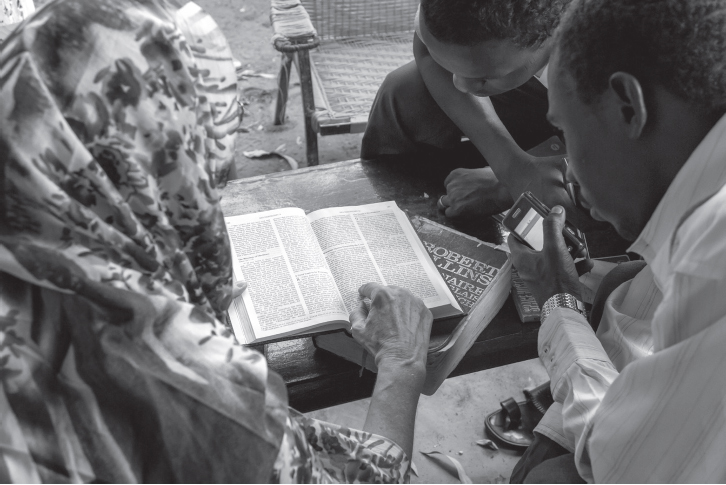
In the nineteenth century, many foreign women missionaries began reaching women in places where women were segregated from men. In countries like India, only women could reach the local women cloistered in zenana (separate women’s quarters), under the purdah system (meaning “seclusion” or “curtain”). Because some homes were off-limits even to foreign missionary women, they began to train local female leaders who could access women confined in private quarters or situated in remote areas. Sometimes called “Bible women,” they went from house to house, distributing Bibles, sharing Jesus in the local language, leading prayer, and teaching women and children. These women were among the first local leaders to serve in independent ministry roles in Asia and Africa. Many of the “Bible women” in the nineteenth and twentieth centuries go unnamed in the historical records. They were widows, mothers, and sisters. Some were educated, others were not. Many were trained by women missionaries. They spread the gospel throughout Asia, Africa, and the Middle East.
Foreign missionaries, seeing the potential of these women, launched the widespread “women’s work for women” mission and created women’s sending boards to reach women in unreached places. For example, the Zenana Mission Society of England was established to send women missionaries and to hire local Bible women with meager wages. Other Bible women volunteered unpaid. In India, there were so many Bible women that women formed their own mission society, the Female Education Society (FES). By the early twentieth century, there were three times as many indigenous women as foreign missionaries. Bible women became the special forces of global missions.
Leading the Way in Asia
In China, Bible woman Dora Yu became the first missionary sent from China when she went to Korea in 1897. As a Bible woman, she preached the gospel and provided medical care to thousands of Korean women. Later, when back in China, she was among the first Chinese missionaries to cut Western funding and live by faith. She also became the first Chinese woman to establish a Bible school, training many preachers and church leaders, both men and women. The well-known leader Watchman Nee was converted under Dora Yu’s ministry. She ignited a season of revival in China that involved several other prominent women leaders and produced many famous male evangelists and preachers. She was invited to be the main speaker at the famous Keswick Convention in England in 1927, where she issued a strong appeal to the Western church to send high-caliber missionaries to China.
By the early twentieth century, there were three times as many indigenous women as foreign missionaries. Bible women became the special forces of global missions.
Reaching the Marginalized in Africa
Similarly in southern Africa in the 1920s, women missionaries began to commission Bible women who trekked throughout Swaziland and Transvaal to share Jesus with women in their kraals (homesteads). Norwegian missionary Malla Moe tells how Dorika, a Bible woman whom she had trained, was used mightily by God to bring many to Christ. Before Malla returned to Norway, she entrusted the mission to Dorika, saying, “You are my feet to preach to these people while I am gone.”
These Bible women paved the way for the Balokole women (“saved ones”) who led the East African Revival within Western mission denominations throughout Uganda, Kenya, Tanzania, Rwanda, and Burundi in the 1930s–50s. The most well-known was the Zulu umphositoli (apostle) Paulina Dlamini. She planted many churches, but the German mission appointed men to lead the churches that she had planted. Soon after, the African-Initiated Churches (AICs), led entirely by Africans, began to spread across the continent. Predominantly led by women, the AIC drew many marginalized women by addressing issues over-looked by Western missionaries, such as prayer for barrenness and how to handle accusations of witchcraft.
May Christ empower many women in our day to continue to serve in His mission in all the ways that God gives them. Women were the first evangelists in history to announce Jesus’s resurrection. The disciples walking to Emmaus explained how they had heard: “Some of our women amazed us. . . . They came and told us that . . . he was alive” (Luke 24:22–24 NIV). Let us continue to be amazed by the global throng of pioneering women who are proclaiming that Jesus is alive! 
RETURN TO LESSON 8: Pioneers of the World Christian Movement
Copyright © 2013 International Mission Board. All rights reserved.