CHAPTER 50
The Obligation of Christians to Use Means for the Conversion of the Heathens
William Carey

From an enquiry into the Obligations of Christians to Use Means for the Conversion of the heathens, 1792, 1991. Used by permission of The Baptist Missionary Society, Didcot, UK.
In 1792, an impoverished and youthful English pastor, parttime teacher, and shoemaker undertook the task of setting down his convictions in a small pamphlet, counteracting the prevailing view in his day that the Great Commission no longer applied to Christians. He possessed few literary graces. He avoided the limelight. He even belonged to one of the smaller bodies of dissenting churches of that day. Yet, William Carey’s “Enquiry” and personal example over the next forty years resulted in a major revolution in outlook and outreach of the Christian Church, primarily as his emphasis established for Protestants the validity and necessity of mission “order” structures.
Carey and a colleague, under the newly formed Baptist Missionary Society, sailed for India in 1793, eventually settling in Serampore, a Danish enclave near Calcutta. Carey, Joshua Marshman, and William Ward, the “Serampore Trio,” translated and printed parts of the Bible into several Asian languages and founded a school for the training of Indian Christians. With little formal education, but possessing extraordinary perseverance and conviction, Carey weathered financial crises, natural disasters, family illness, and criticisms from England to make advances in evangelism, philology, the natural sciences, and education. He exhorted others and himself to “expect great things from God; attempt great things for God.”
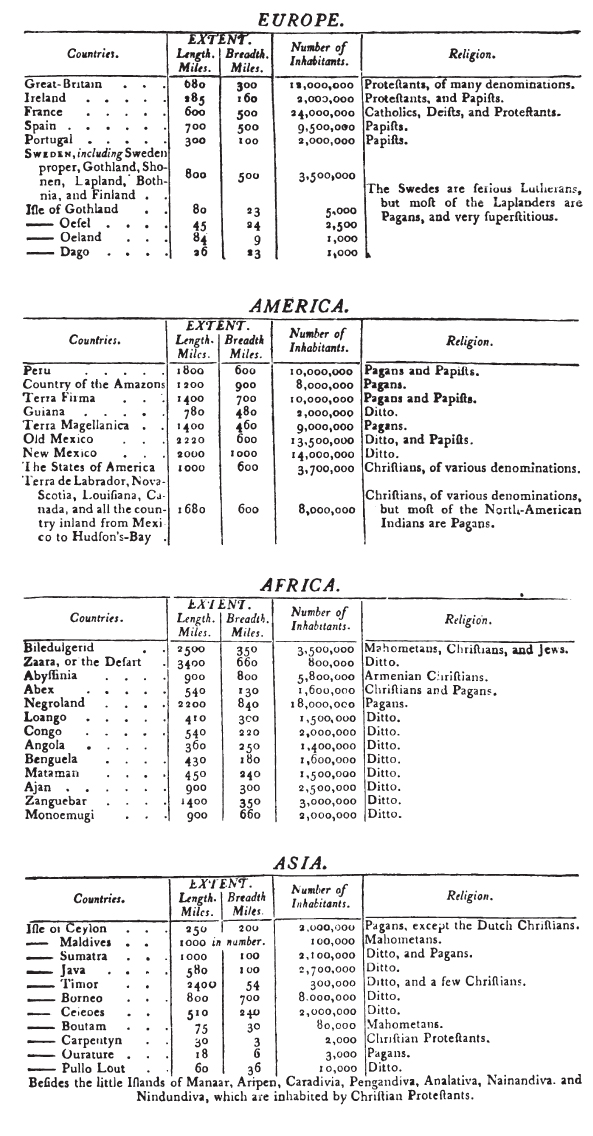
Today, Carey is recognized as the “father of Protestant missions” since historians date the modern era of Protestant missions back to the publishing date of his “Enquiry.” Ernest A. Payne observes, “He who reads the ‘Enquiry’ today is struck, first of all, by its sober matter-of-factness and its modernity. More than a fourth of the pages are taken up with schedules detailing the different countries of the world, their length and breadth, the number of their inhabitants and the religions there represented. Throughout, there is a clear division into sections and the points are numbered. The contents are brief, logical, precise, more like a Blue Book or a committee’s report than a prophetic call to the Church of Christ. There is here no appeal to eloquence or sentiment, no elaborate building up of proof-texts from the Bible, no involved theological argument, but a careful setting down of facts. The very title is characteristic of the author.” George Smith, writing in 1885, called it “the first and still the greatest missionary treatise in the English language.” It has not yet been surpassed in simplicity or cogency.
What follows is a composition of extracted paragraphs from Carey’s original eighty-seven-page “Enquiry.”
As our blessed Lord has required us to pray that his kingdom may come, and his will be done on earth as it is in heaven, it becomes us not only to express our desires of that event by word, but to use every lawful method to spread the knowledge of his name. In order to do this, it is necessary that we should become in some measure acquainted with the religious state of the world; and as this is an object we should be prompted to pursue, not only by the Gospel of our Redeemer, but even by the feelings of humanity, so an inclination to conscientious activity therein would form one of the strongest proofs that we are . . . partakers of that spirit of universal benevolence and genuine philanthropy, which appear so eminent in the character of God himself.
Sin was introduced amongst the children of men by the fall of Adam, and has ever since been spreading its baneful influence. By changing its appearances to suit the circumstances of the times, it has grown up in ten thousand forms, and constantly counteracted the will and designs of God. One would have supposed that the remembrance of the deluge would have been transmitted from father to son, and have perpetually deterred mankind from transgressing the will of their Maker; but so blinded were they, that in the time of Abraham gross wickedness prevailed wherever colonies were planted, and the iniquity of the Amorites was great, though not yet full. After this, idolatry spread more and more, till the seven devoted nations were cut off with the most signal marks of divine displeasure. Still, however, the progress of evil was not stopped, but the Israelites themselves too often joined with the rest of mankind against the God of Israel.
Expect great things from God; attempt great things for God.
Yet God repeatedly made known his intention to prevail finally over all the power of the devil, and to destroy all his works, and set up his own kingdom and interest among men, and extend it as universally as Satan had extended his. It was for this purpose that the Messiah came and died, that God might be just, and the justifier of all that should believe in him. When he had laid down his life, and taken it up again, he sent forth his disciples to preach the good tidings to every creature, and to endeavor by all possible methods to bring over a lost world to God. They went forth according to their divine commission, and wonderful success attended their labours; the civilized Greeks and uncivilized barbarians, each yielded to the cross of Christ, and embraced it as the only way of salvation. Since the apostolic age, many other attempts to spread the Gospel have been made, which have been considerably successful, notwithstanding which a very considerable part of mankind is still involved in all the darkness of heathenism. Some attempts are still being made, but they are inconsiderable in comparison to what might be done if the whole Body of Christians entered heartily into the spirit of the divine command on this subject. Some think little about it, others are unacquainted with the state of the world, and others love their wealth better than the souls of their fellow creatures.
In order that the subject may be taken into more serious consideration, I shall enquire, whether the commission given by our Lord to his disciples be not still binding on us—take a short view of former undertakings—give some account of the present state of the world, consider the practicability of doing something more than is done—and the duty of Christians in general in this matter.
An Enquiry whether the Commission Given by Our Lord to His Disciples Be Not Still Binding on Us
Our Lord Jesus Christ, a little before his departure, commissioned his apostles to Go, and teach all nations; or, as another evangelist expresses it, Go into all the world, and preach the Gospel to every creature. This commission was as extensive as possible, and laid them under obligation to disperse themselves into every country of the habitable globe, and preach to all the inhabitants, without exception, or limitation. They accordingly went forth in obedience to the command, and the power of God evidently wrought with them. Many attempts of the same kind have been made since their day and which have been attended with various success, but the work has not been taken up or prosecuted of late years (except by a few individuals) with that zeal and perseverance with which the primitive Christians went about it. It seems as if many thought the commission was sufficiently put in execution by what the apostles and others have done; that we have enough to do to attend to the salvation of our own countrymen; and that, if God intends the salvation of the heathen, he will some way or other bring them to the Gospel, or the Gospel to them. It is thus that multitudes sit at ease, and give themselves no concern about the far greater part of their fellowsinners, who to this day, are lost in ignorance and idolatry. There seems also to be an opinion existing in the minds of some, that because the apostles were extraordinary officers and have no proper successors, and because many things which were right for them to do would be utterly unwarrantable for us, therefore it may not be immediately binding on us to execute the commission, though it was so upon them. To the consideration of such persons I would offer the following observations.
FIRST, If the command of Christ to teach all nations be restricted to the apostles, or those under the immediate inspiration of the Holy Ghost, then that of baptizing should be so, too; and every denomination of Christians, except the Quakers, do wrong in baptizing with water at all.
SECONDLY, If the command of Christ to teach all nations be confined to the apostles, then all such ordinary ministers who have endeavoured to carry the Gospel to the heathens, have acted without a warrant, and run before they were sent. Yea, and though God has promised the most glorious things to the heathen world by sending his Gospel to them, yet whoever goes first, or indeed at all, with that message, unless he have a new and special commission from heaven, must go without any authority for so doing.
THIRDLY, If the command of Christ to teach all nations extends only to the apostles, then, doubtless, the promise of the divine presence in this work must be so limited; but this is worded in such a manner as expressly precludes such an idea. Lo, I am with you always, to the end of the world. . . .
It has been objected that there are multitudes in our own nation, and within our immediate spheres of action, who are as ignorant as the South-Sea savages, and that therefore we have enough work at home, without going into other countries. That there are thousands in our own land as far from God as possible, I readily grant, and that this ought to excite us to ten-fold diligence to our work, and in attempts to spread divine knowledge amongst them is a certain fact; but that it ought to supersede all attempts to spread the Gospel in foreign parts seems to want proof. Our own countrymen have the means of grace, and may attend on the word preached if they choose it. They have the means of knowing the truth, and faithful ministers are placed in almost every part of the land, whose spheres of action might be much extended if their congregations were but more hearty and active in the cause; but with them the case is widely different, who have no Bible, no written language (which many of them have not), no ministers, no good civil government, nor any of those advantages which we have. Pity therefore, humanity, and much more Christianity, call loudly for every possible exertion to introduce the Gospel amongst them.
A Short Review of Former Undertakings for the Conversion of the Heathen
. . . Thus far the history of the acts of the Apostles informs us of the success of the Word in the primitive times; and history informs us of its being preached about this time, in many other places. Peter speaks of a church at Babylon; Paul proposed a journey to Spain, and it is generally believed he went there, and likewise came to France and Britain. Andrew preached to the Scythians, north of the Black Sea. John is said to have preached in India, and we know that he was at the Isle of Patmos, in the Archipelago. Philip is reported to have preached in upper Asia, Sythia, and Phrygia; Bartholomew in India, on this side of the Ganges, Phrygia, and Armenia; Matthew in Arabia, or Asiatic Ethiopia, and Parthia; Thomas in India, as far as the coast of Coromandel, and some say in the island of Ceylon; Simon, the Canaanite, in Egypt, Cyrene, Mauritania, Libya, and other parts of Africa, and from thence to have come to Britain; and Jude is said to have been principally engaged in the lesser Asia, and Greece. Their labours were evidently very extensive, and very successful; so that Pliny, the younger, who lived soon after the death of the apostles, in a letter to the emperor, Trajan, observed that Christianity had spread, not only through towns and cities, but also through whole countries. Indeed before this, in the time of Nero, it was so prevalent that it was thought necessary to oppose it by an Imperial Edict, and accordingly the proconsuls, and other governors, were commissioned to destroy it. . . .
A Survey of the Present State of the World
In this survey I shall consider the world as divided, according to its usual division, into four parts, Europe, Asia, Africa, and America, and take notice of the extent of the several countries, their population, civilization, and religion. The following tables will exhibit a more comprehensive view of what I propose, than anything I can offer on the subject. (Editor’s note: the following tables are just four of twenty-four tables that Carey included in the “Enquiry.”)
This, as nearly as I can obtain information, is the state of the world; though in many countries, as Turkey, Arabia, Great Tartary, Africa, and America, except the United States, and most of the Asiatic Islands, we have no accounts of the number of inhabitants, that can be relied on. I have therefore only calculated the extent, and counted a certain number on an average upon a square mile; in some countries more, and in others less, according as circumstances determine All these things are loud calls to Christians, and especially to ministers, to exert themselves to the utmost in their several spheres of action, and to try to enlarge them as much as possible.
The Practicability of Something Being Done, More than What Is Done, for the Conversion of the Heathen
The impediments in the way of carrying the Gospel among the heathen must arise, I think, from one or other of the following things: either their distance from us, their barbarous and savage manner of living, the danger of being killed by them, the difficulty of procuring the necessities of life, or the unintelligibleness of their languages.
FIRST, As to their distance from us, whatever objections might have been made on that account before the invention of the mariner’s compass, nothing can be alleged for it, with any color of plausibility in the present age. Men can now sail with as much certainty through the Great South Sea as they can through the Mediterranean, or any lesser sea. Yea, and providence seems in a manner to invite us to the trial, as there are to our knowledge trading companies, whose commerce lies in many of the places where these barbarians dwell. . . .
SECONDLY, As to their uncivilized and barbarous way of living, this can be no objection to any, except those whose love of ease renders them unwilling to expose themselves to inconveniences for the good of others.
It was no objection to the apostles and their successors, who went among the barbarous Germans and Gauls, and still more barbarous Britons! They did not wait for the ancient inhabitants of these countries to be civilized before they could be Christianized, but went simply with the doctrine of the cross and Tertullian could boast that “those parts of Britain which were proof against the Roman armies were conquered by the Gospel of Christ.” It was no objection to an Eliot, or a Brainerd, in later times. They went forth, and encountered every difficulty of the kind, and found that a cordial reception of the Gospel produced those happy effects which the longest intercourse with Europeans without it could never accomplish. It is no objection to commercial men. It only requires that we should have as much love to the souls of our fellow creatures, and fellow sinners, as they have for the profits arising from a few otter-skins, and all these difficulties would be easily surmounted. . . .
THIRDLY, In respect to the danger of being killed by them, it is true that whoever does go must put his life in his hand, and not consult with flesh and blood; but do not the goodness of the cause, the duties incumbent on us as the creatures of God, and Christians, and the perishing state of our fellow men, loudly call upon us to venture all and use every warrantable exertion for their benefit? Paul and Barnabas, who hazarded their lives for the name of our Lord Jesus Christ, were not blamed as being rash, but commended for so doing, while John Mark who through timidity of mind deserted them in their perilous undertaking was branded with censure. After all, as has been already observed, I greatly question whether most of the barbarities practiced by the savages upon those who have visited them have not originated in some real or supposed affront, and were therefore, more properly, acts of self-defense than proofs of ferocious dispositions. No wonder if the imprudence of sailors should prompt them to offend the simple savage, and the offense be resented; but Eliot, Brainerd and the Moravian missionaries, have been very seldom molested. Nay, in general the heathen have showed a willingness to hear the Word, and have principally expressed their hatred of Christianity on account of the vices of nominal Christians.
FOURTHLY, As to the difficulty of procuring the necessaries of life, this would not be so great as may appear as first sight; for though we could not procure European food, yet we might procure such as the natives of those countries which we visit subsist upon themselves. . . .
It might be necessary, however, for two, at least, to go together, and in general I should think it best that they should be married men, and to prevent their time from being employed in procuring necessaries, two, or more, other persons, with their wives and families, might also accompany them, who should be wholly employed in providing for them. In most countries it would be necessary for them to cultivate a little spot of ground just for their support, which would be a resource to them whenever their supplies failed. Indeed a variety of methods may be thought of, and when once the work is undertaken, many things will suggest themselves to us, of which we at present can form no idea.
FIFTHLY, As to learning their languages, the same means would be found necessary here as in trade between different nations. In some cases interpreters might be obtained, who might be employed for a time; and where these were not to be found, the missionaries must have patience, and mingle with the people, till they have learned so much of their language as to be able to communicate their ideas to them in it. It is well known to require no very extraordinary talents to learn, in the space of a year, or two at most, the language of any people upon earth, so much of it at least, as to be able to convey any sentiments we wish to their understandings.
An Enquiry into the Duty of Christians in General, and What Means Ought to Be Used, in order to Promote This Work
If the prophecies concerning the increase of Christ’s kingdom be true, and if what has been advanced, concerning the commission given by him to his disciples being obligatory on us, be just, it must be inferred that all Christians ought heartily to concur with God in promoting his glorious designs, for he that is joined to the Lord is one spirit.
One of the first, and most important of those duties which are incumbent upon us, is fervent and united prayer I trust our monthly prayer-meetings for the success of the Gospel have not been in vain. It is true a want of importunity too generally attends our prayers; yet unimportunate and feeble as they have been, it is to be believed that God has heard, and in a measure answered them. . . . If an holy solicitude had prevailed in all the assemblies of Christians in behalf of their Redeemer’s kingdom, we might probably have seen before now, not only an open door for the Gospel, but many running to and fro, and knowledge increased; or a diligent use of those means which providence has put in our power, accompanied with a greater blessing than ordinary from heaven.
Many can do nothing but pray, and prayer is perhaps the only thing in which Christians of all denominations can cordially, and unreservedly unite; but in this we may all be one, and in this the strictest unanimity ought to prevail. . . .
We must not be contented, however, with praying, without exerting ourselves in the use of means for the obtaining of those things we pray for. Were the children of light but as wise in their generation as the children of this world they would stretch every nerve to gain so glorious a prize, nor ever imagine that it was to be obtained in any other way.
When a trading company has obtained their charter, they usually go to its utmost limits; and their stocks, their ships, their officers, and men are so chosen, and regulated, as to be likely to answer their purpose; but they do not stop here, for encouraged by the prospect of success, they use every effort, cast their bread upon the waters, cultivate friendship with everyone from whose information they expect the least advantage. . . .
Suppose a company of serious Christians, ministers and private persons, were to form themselves into a society, and make a number of rules respecting the regulation of the plan, and the persons who are to be employed as missionaries, the means of defraying the expense, etc., etc. This society must consist of persons whose hearts are in the work, men of serious religion, and possessing a spirit of perseverance; these must be a determination not to admit any person who is not of this description, or to retain him longer than he answers to it.
From such a society a committee might be appointed, whose business it should be to procure all the information they could upon the subject, to receive contributions, to enquire into the characters, tempers, abilities and religious views of the missionaries, and also to provide them with necessaries for their undertakings.
If there is any reason for me to hope that I shall have any influence upon any of my brethren, and fellow Christians, probably it may be more especially amongst them of my own denomination. I would therefore propose that such a society and committee should be formed amongst the particular Baptist denomination.
I do not mean by this, in any wise to confine it to one denomination of Christians. I wish with all my heart, that everyone who loves our Lord Jesus Christ in sincerity would in some way or other engage in it. But in the present divided state of Christendom, it would be more likely for good to be done by each denomination engaging separately in the work than if they were to embark in it conjointly.
In respect to contributions for defraying the expenses, money will doubtless be wanting If congregations were to open subscriptions of one penny, or more per week, according to their circumstances, and deposit it as a fund for the propagation of the Gospel, much might be raised in this way.
We are exhorted to lay up treasure in heaven, where neither moth nor rust doth corrupt, nor thieves break through and steal. It is also declared that whatsoever a man soweth, that shall he also reap. These Scriptures teach us that the enjoyments of the life to come bear a near relation to that which now is a relation similar to that of the harvest, and the seed. It is true all the reward is of mere grace, but it is nevertheless encouraging what a treasure, what an harvest must await such characters as Paul, and Eliot, and Brainerd, and others, who have given themselves wholly to the work of the Lord. What a heaven will it be to see the many myriads of poor heathens, of Britons amongst the rest, who by their labours have been brought to the knowledge of God. Surely a crown of rejoicing like this is worth aspiring to. Surely it is worthwhile to lay ourselves out with all our might in promoting the cause and kingdom of Christ. 
RETURN TO LESSON 8: Pioneers of the World Christian Movement
Were the children of light but as wise in their generation as the children of this world they would stretch every nerve to gain so glorious a prize, nor ever imagine that it was to be obtained in any other way.