CHAPTER 45
A Historical Survey of African Americans in World Missions
David Cornelius

David Cornelius was a missionary in Nigeria with the International Mission Board, Southern Baptist Convention, for nine years as a church planter and urban evangelism consultant. Since 1992, he has worked in the US office of the IMB and is presently a consultant for African American Mobilization.
Although their ability to carry out a concern for world missions has varied throughout the years, a missionary theme endures in African American churches today. African Americans have turned their hearts toward world missions since the time slaves began to accept Christianity. Their involvement can be traced back to the eighteenth and nineteenth centuries when African American missionaries went not only to Africa but to the Caribbean islands as well. God is building on and extending this heritage to bring forth an even greater mission zeal in our day.
North American Christians as a whole have felt that African Americans were not interested in world missions. This opinion is based in part on the fact that few of the North American Christians serving today as longterm missionaries are African Americans. Most churches with pre-dominantly African American memberships have chosen to carry out the mandate of the Great Commission at home. International missions1 have been left, for the most part, in the hands of “White Christians.”
While the observations that led to this opinion are accurate, the conclusion is not necessarily true. The fact is that African American Christians are interested in international missions. African Americans do feel the responsibility to fulfill the overarching mandate of our Lord’s command to make disciples of all nations. African Americans have a history of costly engagement in missions abroad.
African American Pioneers in International Missions
The historic involvement of African Americans in international missions may be seen as far back as the eighteenth century. “The foreign mission motif predates home missions in general among Black Baptists.”2 From the time slaves began accepting Christianity, it was in their hearts to carry the gospel of Christ not only back to their fatherland, but also to other parts of the world. According to historical records, African American missionaries not only went to Africa in the eighteenth and nineteenth centuries but to Canada and the Caribbean islands as well.
Pentecostal Pioneers
Though it is the largest African American Pentecostal denomination, the missionary endeavors of the Church of God in Christ (COGIC, founded in 1907) were largely domestic before the end of World War II. In fact, it was only after the Civil Rights period that the COGIC began to emphasize international missions in Africa and the Caribbean.3
Methodist Pioneers
Both the African Methodist Episcopal (AME) and African Methodist Episcopal Zion (AMEZ) denominations started missionary work in Africa during the nineteenth century. The denominations established work in West Africa in the early years and in South Africa toward the end of the nine-teenth century.
Rev. Daniel Coker, who had been pastor of the Bethel AME Church, Baltimore, Maryland, has the distinction of being the first African American Methodist missionary to serve in Africa. Coker, with help from the American Colonization Society (ACS),4 sailed to Sierra Leone in 1820, only a few months before Baptist missionary Rev. Lott Carey (sometimes spelled Cary) left Virginia for Liberia. The third major African American Methodist denomination, the Christian Methodist Episcopal (CME), began its formal missionary work in Africa in 1911 as a joint venture with the Methodist Episcopal Church, South. They chose the Congo as their first international mission field and have since sponsored missionary efforts in South Africa, West Africa, and the Caribbean.
Baptist Pioneers
Although Methodists are older as a denomination among African Americans, Baptists have a more extensive record in the area of international missions. George Liele and Prince Williams were pioneers.
Rev. George Liele (sometimes spelled “Lisle”), a freed slave and preacher from South Carolina, left the United States for Jamaica in 1783. By 1784, he had founded the First Baptist Church of Kingston, Jamaica. It is interesting to note that just as the spread of the gospel in New Testament times was due, in part, to persecution (Acts 8:1), so Liele left the country of his birth for fear of being persecuted (reenslaved).
Another freed slave from South Carolina, Rev. Prince Williams, left Saint Augustine, Florida, sometime following the Revolutionary War. Around 1790, he organized a Baptist church. In 1801 he secured land and built a small house of worship.5
The Vision of Lott Carey
By 1790, David George, Hector Peters, and Sampson Calvert all had arrived in Africa and begun preaching on its West Coast. It was not until Lott Carey came on the scene, however, that a more structured approach to world missions began to emerge. Born in 1780, Carey worked as a young man in Richmond’s tobacco warehouse district. Through his own savings and with help from sympathetic White people, he raised the money to purchase both his freedom and that of his family. He also learned to read and write by attending a night school conducted by William Crane, a deacon of the First Baptist Church of Richmond.
Carey’s grandmother had become a Christian after being taken from Africa as a slave. She longed to see the gospel preached in her homeland and believed her grandson could be used by God as a missionary. Carey became a powerful and well-known preacher. In 1815, he led the organization of the African Baptist Foreign Missionary Society. It was the first organization for world missions founded by African Americans in the United States.6
Through the intervention of William Crane and the Richmond Baptist Missionary Society, the General Missionary Convention of the Baptist Denomination in the United States of America for Foreign Missions (known simply as the Triennial Convention because it met every three years), which had been organized in 1814, agreed to support Lott Carey and Colin Teague (a free African American preacher who shared Carey’s desire to preach the gospel to the Africans). On January 16, 1821, after several years of working toward fulfilling his dream of preaching the gospel to the Africans, Carey, along with Colin Teague and their families, sailed for Liberia.
The funds for their journey came from several sources, including contributions from their own pockets (some $1,500 from the sale of Carey’s farm), the African Baptist Foreign Missionary Society, some White people who were sympathetic to his cause and the American Colonization Society. Shortly after their arrival in Liberia they established the Providence Baptist Church.7
Carey labored and established a colony in which he served as chief political, religious, and military leader and medical officer. In spite of the difficulties faced, he felt that Africa was the best place for him and his family (and any Blacks who did not want the hue of their skin to hinder their advancement in the society in which they lived). Because of his stand on various issues, he incurred the dis-favor of some of the colonial rulers. Carey was killed in an explosion in 1828.8
Long before the Emancipation Proclamation, African American Christians made efforts to participate in international missions. During the nineteenth century prior to 1863, African Americans (primarily those who were free) made numerous attempts to establish a national entity that would enable them to carry out their mission work, both domestically and internationally, more effectively. Lack of finances was a major hindrance to success. On occasions, they requested assistance from White Christians and their organizations. In some cases, assistance was given; in others, it was refused. Occasionally there was disagreement as to whether or not to join with White-controlled missionary societies in order to carry out their work. In some cases, the two races did work together; in others, Blacks chose to work independently, expressing concern that Whites would dominate the relationship and decide what would be done with little or no consideration of what their Black partners wanted.
From 1843 to 1845, the long-standing tension between northern and southern Christians over the issue of slavery came to a head. It resulted in separation of both the Methodist and Baptist denominations into basically two groups: proslavery and antislavery. For the Baptists, it meant the rupture of the fragile alliance between Northerners (who were mostly antislavery), and Southerners (who were mostly proslavery) in the Triennial Convention. On May 8, 1845, a new convention, the Southern Baptist Convention (SBC), was born from this rupture.
Early on, the young SBC sought to show that in spite of the stand of both individuals and member congregations on the slavery issue, they possessed great interest in the spiritual welfare of Blacks and slaves. Before the founding meeting was over, two boards had been established. One, the Board for Domestic Missions, focused on evangelizing inhabitants of the United States (including Blacks and Indians). The other, the Foreign Mission Board, was to focus on helping Southern Baptists to evangelize abroad.
By 1846, a year after the founding of its Foreign Mission Board, the new convention had appointed two African Americans as missionaries (John Day and A. L. Jones). Over the next forty years, the board either appointed or gave support to at least sixty-two Black missionaries.9 The vast majority of these served in Africa.
Baptists after the Emancipation Proclamation
Soon after the effective date of the Emancipation Proclamation (January 1, 1863), African Americans, who had just been freed from slavery by the Proclamation, began leaving White Baptist churches and organizing their own churches and associations. Driven in part by a desire to become more efficient and effective in evangelizing Africa, Black Baptists continued to attempt to organize a national convention. Attempts at forming a national convention were hindered, in part, by regionalism. It would not be until 1895 that Black Baptists would succeed in organizing an enduring national convention.
Between 1863 and 1895, African Americans continued seeking to “flesh out” their God-given mandate of sending missionaries to evangelize Africa. A number of outstanding African American missionaries moved these efforts forward.10 Among them was a Virginiaborn preacher named William W. Colley.
The Passion of William W. Colley
Colley is recognized as the only African American Baptist to have served as an appointed missionary of both White- and Black-administered missionary-sending agencies. William W. Colley was appointed by the Foreign Mission Board, SBC, in 1875 to serve in West Africa as the assistant to W. J. David, a White missionary from Mississippi. In November 1879, he returned to the United States with the conviction that more Blacks should be involved in international missions, especially in Africa. As he traveled back and forth across the country, he urged Black Baptists to take an independent course in mission work and form their own sending agency.11 Colley’s effort is considered the primary force in the founding of the Baptist Foreign Mission Convention (BFMC) on November 24, 1880. The BFMC became one of three conventions that merged in 1895 to form the National Baptist Convention USA, Inc., the first truly national convention of Black Baptists in the United States.12
Colley was among the first missionaries appointed by the BFMC in 1883. He, along with his wife, Joseph and Hattie Presley, John J. Cole, and Henderson McKinney, was sent to West Africa.
It has been said, speaking of missionaries in those days, that Africa was the White man’s graveyard (referring to the many White missionaries who died as a result of disease contracted while serving in Africa). It may also be said that Africa was the Black man’s graveyard. Of the first dozen missionaries sent to Africa by the BFMC, eleven either died on the field or became so ill that they had to return to the United States. The popular notion (held by both Whites and Blacks) that African Americans could tolerate the conditions in Africa better than Whites was proven to be untrue.
The years during which the BFMC operated (1880–1895) were characterized by waxing and waning of both interest and support. During the early years, there was great excitement over the work being done in Africa. As the years passed and hardship and tragedy struck, causing one missionary after another to leave the field, interest seemed to decline. During the entire existence of the BFMC, those states which had missionaries on the field whom they could claim as their own seemed to give stronger support to the convention. There were other factors in the decreasing support.13 In the end, it was the founding of such agencies as the Foreign Mission Board of the National Baptist Convention USA, Inc. and the Lott Carey Baptist Foreign (and Home) Mission Convention that has continued to foster the international missions efforts of Black Baptists in the United States.
Always Moving beyond Hindrances
Historically, there have been factors that have worked against full participation of African Americans in international missions. As a result, throughout much of their history, African Americans have achieved neither their full desire nor their full potential in the international missions arena. Many of those hindering factors have been eliminated, but others remain. Even so, there is a powerful heritage of moving beyond hindrances.
During the years of slavery, many who had the desire to serve as international missionaries were limited in obvious ways. But as soon as African Americans began to shed the chains of slavery, they began to press their way to foreign lands with the gospel. African Americans have worked in partnership with White Christians, and they have formed their own conventions and agencies. There have been periods when White Christians did not want increasing numbers of African Americans serving on international mission fields alongside them.14 At other times, African American participation was discouraged by governmental actions: refusal of visas or unreasonably high fees for visas; some colonial governments even refused to honor lawfully obtained visas for certain African countries when they were in power. Whatever the circumstances, God empowered African Americans as His missionaries.
In the midst of the post-Emancipation activity of African American Christians to evangelize Africa, there was also the struggle to gain fully functional freedom in the United States. It did not take long for Jim Crow laws mandating segregation to spread across the land. It became the calling of the Black church to lead in this struggle.
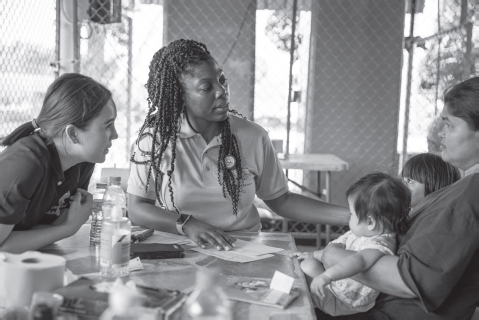
But as soon as African Americans began to shed the chains of slavery, they began to press their way to foreign lands with the gospel.
Copyright © 2017 International Mission Board.
All rights reserved.
On the home front, there was the aftermath of the Civil War in which segregation and discrimination, fostered by Jim Crow laws, caused the plight of many Blacks in the United States to be worse than it was during slavery. This meant that, being the only institution that African Americans had under their control, the Black church had to lead in the struggle of her people for full citizenship and human rights in the country of their birth. Somewhere in the struggle, the vision for world evangelization that many of the early Black Christian leaders had exhibited became blurred. As a result, largescale neglect of the international missions enterprise was experienced among African Americans. In spite of this, neither the interest in nor the sense of responsibility for a lost, dying world was diminished.
Many of the negatives of the nineteenth century have passed away. In spite of all that has changed for the good, things are still not what they should be. Various walls of separation still exist in some areas. The color of one’s skin is still a hindrance in some areas. Attempts at segregation are still being made by some. However, in spite of these challenges, tremendous strides are being made in world
evangelization because the body of Christ continues to learn to work together as one, learning what unity really is!
Onward to Fulfill the Commission
This brief summary shows that African Americans are not newcomers in the area of international missions. With even a cursory look at current events, one is left standing in awe at what God is doing with African Americans in international missions. Where do we go from here?
Numerous organizations established to mobilize African Americans toward more participation in international missions have been born over the past three decades. Mainline White denominations and missionary-sending agencies have begun to actively seek and enlist Blacks to serve over-seas alongside the White missionaries. African American denominational leaders are being challenged to provide more opportunities for their constituents to participate in international missions in a meaningful way.
God is raising up a new generation of pastors in the African American church: pastors who are being led to seek out opportunities for their own involvement, and that of their congregations, in international missions. International partnerships between Black congregations, associations, state conventions, and fellowships in the United States and overseas entities are developing at an ever-increasing rate. The number of African American Christians participating in shortterm international missions opportunities continues to rise. Finally, there is a developing trend toward ever-increasing numbers of African Americans giving their lives overseas, serving long-term as Christian missionaries.
African Americans are not newcomers in the area of international missions. With even a cursory look at current events, one is left standing in awe at what God is doing with African Americans in international missions.
The African American church is a sleeping giant in the area of international missions: a giant that is being awakened by her Lord. Only God knows the extent to which His kingdom will be strengthened as the full potential of this giant in international missions is realized! 
RETURN TO LESSON 8: Pioneers of the World Christian Movement
Notes
1. In this article, the phrase “international missions” is used instead of the more familiar phrase “foreign missions.” While they may be used interchangeably, the author’s preference is “international,” due primarily to some negative connotations that the word “foreign” has incurred over the years. “Foreign” will be used only to designate proper names of organizations to which the author may refer.
2. Leroy Fitts, A History of Black Baptists (Nashville: Broadman Press, 1985), 109.
3. C. Eric Lincoln and Lawrence H. Mamiya, The Black Church in the African American Experience (Durham: Duke University Press, 1990), 90.
4. While it is clear that the motives of the ACS were racist and self-serving (they wanted to send freed slaves back to Africa in order that they not be problematic to the White slave owners in the United States), men like Coker, who accepted their help in getting to Africa, were far more interested in spreading the gospel among the Africans. The society even went so far as to negotiate with African leaders for property to be used for colonization by those returning.
5. Fitts, History of Black Baptists, 110.
6. William J. Harvey III, Bridges of Faith Across the Seas (Philadelphia: The Foreign Mission Board of the National Baptist Convention USA, 1989), 16.
7. Along with William Crane and some others, they had organized the Providence Baptist Church in Richmond before they sailed for West Africa. Today, this church continues to have an effective ministry in the city of Monrovia, Liberia.
8. History reports that the explosion was an accident that occurred as he was preparing to defend the colony against an invading tribe. Some, however, believe that Carey’s death was an assassination. Proponents of this theory believe that they have evidence to support their belief.
9. A record of these individuals may be found in the archives of the International Mission Board, located in its home office building in Richmond, VA.
10. Others were Solomon Cosby and Harrison N. Bouey. Bouey was appointed by the South Carolina Baptist Educational, Missionary and Sunday School Convention. That convention is now known as the Baptist Educational and Missionary Convention of South Carolina.
11. For a list of possible reasons with explanations, along with a more extensive discussion on W. W. Colley’s missionary ministry, see Sandy D. Martin’s book, Black Baptists and African Missions: The Origins of a Movement 1880–1915 (Macon, GA: Mercer University Press, 1989), 49ff.
12. The National Baptist Convention USA, Inc. was organized in September, 1895. It resulted from a merger of three smaller conventions: the Baptist Foreign Mission Convention (founded in 1880), the American National Baptist Convention (founded in 1886), and the Baptist National Educational Convention (founded in 1893). The resolution leading to the founding of this convention read, in part, “That there shall be one national organization of American Baptists. Under this, there shall be a Foreign Mission Board, with authority to plan and execute the Foreign Mission work, according to the spirit and purpose set forth by the Foreign Mission Convention of the United States.” Stated another way, a major part of the work of the new convention was to carry on the foreign mission focus of the Baptist Foreign Mission Convention.
13. As early as 1886, a decline in support for the BFMC could be seen. By 1888, the convention’s work was severely impaired. By the early 1890s, the convention’s work, for all practical purposes, did not exist. Several factors may have contributed to this declining support. (1) Prior to the founding of the BFMC, a number of states appointed and sent their own missionaries. Even after the founding of the convention, this practice continued. (2) There were those who chose to work with White missionary societies and organizations, believing these groups to be the more “legitimate” channels for Baptists to do missionary work since they had been established for some time. (3) During the late 1880s, the economy was especially bad for African Americans. In addition to the country’s economy being in a slump, segregation and discrimination were having a devastating impact on African Americans. (4) Complaints from missionaries on the field that they were not being paid in a timely manner, or that they were not receiving support at all, may have contributed to a decline in Black Baptists’ confidence in the convention’s governing board. (5) During those periods of time when there were no BFMC missionaries on the field, the support was noticeably less. By 1894, the convention had no missionaries on the field. No doubt, this had a devastating impact on the support given to the convention.
14. There have always been those African Americans who were willing, and even anxious, to serve alongside their White brothers and sisters on the international mission field. Even here, there have been hindrances. During the nineteenth century, African American missionaries serving under appointment of White-administered missionary-sending agencies most often had to have White super-visors available before being sent to the field. It was well past the mid-twentieth century before most White-administered sending agencies (especially those that are denominationally based) would accept African American candidates. These hindrances no longer exist. Even before the time of Carey, there were Black Christians who felt that God had given them, as a race, the mandate to have primary responsibility for taking the gospel back to Africa. Many of the efforts to start state, regional and national bodies had this mandate as a driving force. The desire was so strong that a number of leaders sought to have Black Baptists join with White Baptists in order to expedite this mission (even though the sting of their mistreatment in White churches during and after slavery was still fresh). Some opponents of these suggested alliances argued that White American Christians had ignored Africa and that if Blacks did not chart their own course, the missions efforts of the Whites would dilute, and even hinder, the efforts being made by Blacks to evangelize Africa.